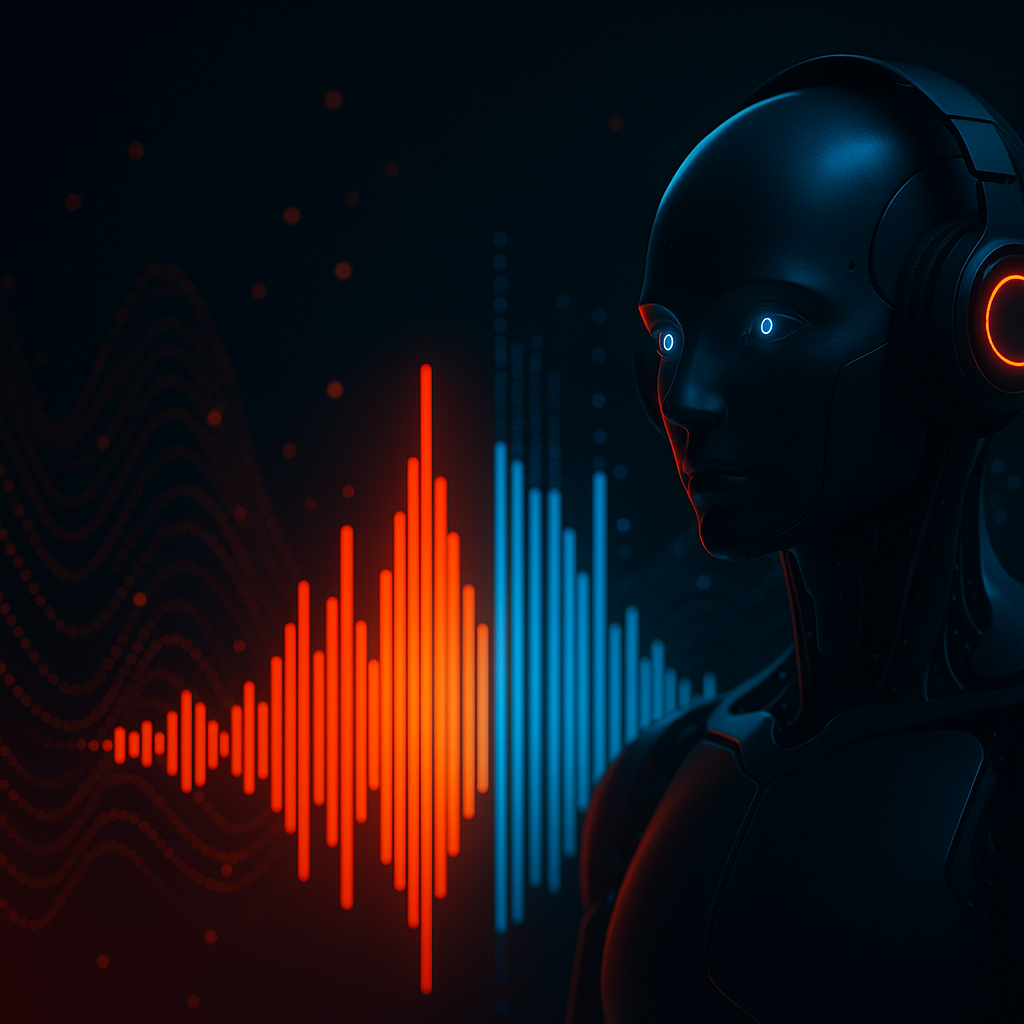
Artificial intelligence has already redefined how we write, paint, and communicate — but now it’s learning to feel. In the world of music production, AI isn’t just mixing tracks or recommending playlists; it’s beginning to understand emotion, tone, and intention. The next revolution in music isn’t about replacing artists — it’s about empowering them through intelligent sound design.
What Is AI Sound Design?
AI sound design refers to the use of machine learning algorithms and neural networks to create, modify, and enhance audio. Instead of manually tweaking knobs or layering sounds, producers can now collaborate with AI systems trained on massive libraries of audio data. These systems learn timbre, texture, and rhythm patterns to generate unique, human-like sounds.
How AI Creates Emotion Through Sound
Music has always been emotional, but teaching machines to understand emotion is one of the greatest challenges in AI. Advanced models like OpenAI’s Jukebox, Google’s Magenta, and Sony’s Flow Machines can now recognize patterns of emotion across genres — from melancholy piano tones to euphoric electronic buildups. By analyzing acoustic features like pitch, tempo, and harmony, AI systems can compose music that evokes specific emotional responses.
Collaboration Between Humans and Machines
Rather than competing with human creativity, AI sound design acts as a collaborator. Producers use AI tools to inspire new directions, suggest chord progressions, or create atmospheric textures. Artists like Taryn Southern and Holly Herndon have already released albums co-composed with AI models, proving that machine creativity can enhance, not replace, artistic expression.
The Role of Neural Networks in Sound Design
Deep learning models called neural networks form the foundation of modern AI sound design. They analyze vast datasets of musical compositions and audio samples to learn relationships between notes, rhythms, and harmonics. Generative Adversarial Networks (GANs) can even produce new soundscapes that don’t exist in nature, bridging the gap between synthetic and organic sound.
AI Sound Design in Film, Gaming, and VR
In immersive media like film, gaming, and virtual reality, AI-driven sound engines are transforming the listening experience. They can adapt soundtracks in real time based on a user’s emotions or actions — intensifying tension during gameplay or calming the mood in meditative VR experiences. This dynamic interaction redefines sound design as a living, responsive layer of storytelling.
The Creative Edge
AI sound design gives creators a new kind of instrument — one that listens and learns. Musicians can sculpt tones with descriptive prompts, producers can refine mixes through AI mastering assistants, and composers can generate harmonies aligned with their vision. It’s not automation; it’s amplification — expanding what artists can imagine and produce.
Challenges and Ethical Concerns
As AI starts generating original music, questions of ownership and authorship emerge. Should AI-created works be copyrighted? If an algorithm trained on existing songs produces something new, who owns it — the developer, the artist, or the data source? Balancing innovation with ethics will define the long-term future of AI music creation.
The Future of Music Creation
The future of AI sound design lies in co-creation. Soon, AI models will learn individual artistic styles, adapting to personal preferences for rhythm, tone, and structure. Imagine an AI collaborator that anticipates your next chord, understands your creative energy, and evolves with your growth — merging intuition with intelligence.
Conclusion
AI sound design is not about replacing emotion — it’s about decoding and enhancing it. By merging computation with creativity, AI offers a new language for sound — one that listens, learns, and feels. The musicians of tomorrow won’t just play instruments; they’ll compose alongside algorithms, turning imagination directly into music.