
Classical music is not just a genre — it is a living tradition that transcends time, culture, and geography. From the grand concert halls of Vienna to the quiet hum of a violinist practicing in a small studio, the sounds of Bach, Mozart, and Beethoven continue to resonate across centuries. Even in today’s era of electronic beats and digital soundscapes, classical music remains an unshakable foundation for artistic expression, emotional depth, and intellectual exploration.
The Origin of a Universal Language
The roots of classical music trace back to the medieval and baroque periods, where composers like Johann Sebastian Bach and George Frideric Handel created intricate compositions that shaped the foundation of Western music theory. Their work introduced structured harmonies, counterpoint, and orchestration — principles that continue to guide musicians today. What makes classical music unique is its universality; it communicates emotion without words, allowing listeners across the world to connect through melody alone.
The Emotional Power of Classical Music
Few art forms can capture the full range of human emotion like classical music. A symphony can move from the deepest sorrow to the highest triumph within a few bars. Composers such as Beethoven and Tchaikovsky mastered the art of expressing human struggle and victory through sound. Listening to Beethoven’s Ninth Symphony or Tchaikovsky’s Swan Lake can still evoke goosebumps centuries later. Classical music teaches us that emotion doesn’t need language — it flows through tone, tempo, and texture.
Influence on Modern Music and Film
While pop, rock, and electronic music dominate today’s charts, their DNA is deeply intertwined with classical roots. Many modern composers borrow harmonic structures and orchestral arrangements from the classical tradition. Film scores, in particular, owe much of their grandeur to symphonic music. Think of John Williams’ Star Wars theme or Hans Zimmer’s orchestral soundtracks — their emotional depth comes straight from the playbook of Romantic and Baroque masters. Classical music continues to shape how we experience emotion in cinema and beyond.
A Bridge Between Past and Present
In a world where everything changes rapidly, classical music serves as a bridge between history and innovation. Modern orchestras blend traditional instruments with digital enhancements, creating hybrid performances that appeal to younger audiences. Institutions such as the Berlin Philharmonic and London Symphony Orchestra are embracing technology — offering live-streamed concerts and virtual reality experiences that bring symphonic music to new generations.
The Role of Classical Music in Mental Wellness
Recent scientific studies highlight how classical music has tangible effects on the brain. Listening to Mozart or Chopin can reduce stress, enhance focus, and improve sleep quality. Music therapy programs across hospitals and wellness centers integrate classical compositions to promote emotional healing. The structure and rhythm of classical music align with the body’s natural patterns, creating a soothing and balancing effect on the nervous system.
Education and Cultural Legacy
Learning classical music builds discipline, creativity, and cognitive skills. Young musicians trained in classical traditions gain a deep understanding of rhythm, pitch, and harmony, which translates into success in other musical genres. Programs like “El Sistema” in Venezuela and youth orchestras worldwide are proving that exposure to classical training can transform communities and open new opportunities for children regardless of background.
The Digital Renaissance of Classical Music
Streaming platforms have revitalized the reach of classical music. Apps like Idagio, Apple Music Classical, and Spotify’s curated playlists are bringing masterpieces to global audiences. Emerging artists are finding ways to remix and reinterpret classical pieces, blending them with modern instruments or electronic sounds. This digital renaissance ensures that classical music continues to evolve — not as a relic, but as a living, adaptive art form.
The Enduring Allure
So why does classical music still inspire generations? The answer lies in its timelessness. Every era rediscovers its beauty in a new form. Whether it’s Yo-Yo Ma performing Bach’s cello suites, Lang Lang bringing Chopin to global stages, or young composers blending symphonies with hip-hop rhythms, classical music continues to reinvent itself while preserving its core essence — emotional truth.
In a noisy world full of fleeting trends, classical music reminds us of stillness, patience, and craftsmanship. It stands as proof that art doesn’t need to be loud to be powerful — it just needs to be honest. For every generation that seeks meaning, harmony, and depth, classical music will remain a guiding light, echoing through time with elegance and grace.
Author: bhaskars1315
-

The Timeless Allure of Classical Music: Why It Still Inspires Generations
-
Power BI Revolution: Turning Data into Decisions
In today’s digital world, data has become the new currency. Every organization, regardless of size or industry, generates enormous amounts of data every single day. Yet, without a structured way to interpret it, data remains just numbers. This is where Power BI — Microsoft’s flagship business intelligence tool — changes the game by turning raw data into meaningful insights that drive smart business decisions.
Empowering Businesses with Data Visualization
Power BI helps businesses visualize their data through interactive dashboards, rich charts, and customizable reports. It connects to hundreds of data sources — from Excel spreadsheets to cloud-based databases like Azure, Google BigQuery, and Salesforce — providing a unified view of your business metrics in one place. Decision-makers can easily identify patterns, trends, and outliers without needing deep technical expertise.
AI-Powered Insights
What sets Power BI apart is its integration with artificial intelligence. With built-in AI visuals, natural language queries (Q&A), and automated machine learning, Power BI allows users to ask questions about their data in plain English. This bridges the gap between complex analytics and everyday business needs, empowering everyone — from executives to analysts — to extract insights effortlessly.
Real-Time Analytics and Automation
Businesses no longer have to wait for static reports. Power BI’s real-time data streaming capabilities ensure live monitoring of KPIs, operational metrics, and customer engagement dashboards. The integration with Power Automate also enables workflow automation — for instance, sending alerts or generating reports automatically when specific thresholds are reached.
Scalability and Security at Enterprise Level
Whether you’re a startup tracking marketing performance or a Fortune 500 managing global supply chains, Power BI scales seamlessly. Its enterprise-grade security, data encryption, and compliance features ensure that sensitive information stays protected. Integration with Azure Active Directory further strengthens access control and governance.
The Future of Business Intelligence
As AI and automation continue to shape the analytics landscape, Power BI stands at the forefront. Its continued evolution with predictive modeling, enhanced visual storytelling, and collaborative dashboards positions it as an indispensable tool for modern enterprises.
Power BI isn’t just about data visualization — it’s about enabling a culture of data-driven decision-making. In the coming years, organizations that harness tools like Power BI will lead industries by anticipating trends, optimizing performance, and innovating faster. -
The Evolution of EDM: From Underground Beats to Global Stages
Electronic Dance Music, or EDM, is more than just a genre — it’s a global movement. From dimly lit warehouses in Chicago to massive open-air festivals across Europe and Asia, EDM has evolved into one of the most influential forces in modern music. Its story is one of rebellion, innovation, and community — uniting millions through rhythm, technology, and emotion.
The Birth of Underground Electronic Music
The origins of EDM can be traced back to the 1970s and early 1980s when disco began to fade, and underground artists experimented with drum machines, synthesizers, and sequencers. In cities like Chicago and Detroit, pioneers such as Frankie Knuckles and Juan Atkins created early forms of house and techno. These sounds, characterized by repetitive beats and futuristic tones, laid the foundation for modern dance music.
The European Influence
While the United States gave birth to house and techno, Europe became the fertile ground where EDM flourished. Clubs in Berlin, Manchester, and Ibiza turned electronic music into a lifestyle. The rave culture of the 1990s saw the emergence of trance and drum-and-bass, with artists like Paul van Dyk, The Prodigy, and Daft Punk pushing the boundaries of sound and performance. This period marked the global expansion of electronic music and the birth of the superstar DJ.
The Digital Revolution
The 2000s brought a digital revolution that transformed how EDM was produced and consumed. Affordable software like Ableton Live, FL Studio, and Logic Pro democratized music production, allowing bedroom producers to create professional-grade tracks. Online platforms such as SoundCloud and YouTube gave rise to new artists and genres, accelerating EDM’s spread beyond club walls.
The Rise of Global Festivals
As EDM gained popularity, large-scale festivals like Tomorrowland, Ultra Music Festival, and Electric Daisy Carnival redefined live entertainment. These events combined music, technology, and art into immersive experiences that attracted millions of fans each year. The DJ booth became the modern stage, and artists like Calvin Harris, Tiësto, and Martin Garrix became global icons.
Genre Fusion and Experimentation
EDM has never been confined to one sound. Over time, it absorbed influences from hip-hop, pop, and rock, creating subgenres like future bass, trap, and progressive house. This genre-blending not only broadened EDM’s audience but also encouraged experimentation. Collaborations between DJs and mainstream artists, such as Avicii and Coldplay, bridged the gap between electronic and popular music.
The Role of Technology and AI
Technology has always been at the heart of EDM’s innovation. Today, artificial intelligence and real-time sound synthesis are pushing creative boundaries even further. AI-assisted composition tools and generative music software allow producers to experiment with new sonic landscapes, blurring the line between human creativity and machine precision.
The Cultural Impact of EDM
Beyond its sound, EDM represents a global community built around unity, freedom, and self-expression. The ‘PLUR’ philosophy — Peace, Love, Unity, and Respect — remains central to rave culture. EDM has influenced fashion, visual arts, and even mindfulness practices, as electronic music continues to serve as a form of emotional release and connection.
The Future of EDM
As we move deeper into the 2020s, EDM continues to evolve. Hybrid live performances, immersive visuals, and interactive virtual concerts are redefining the festival experience. With Web3, blockchain-based ticketing, and decentralized streaming platforms on the horizon, the next era of EDM will likely be even more global, inclusive, and innovative.
Conclusion
From underground clubs to global stages, EDM’s journey reflects the power of technology and human creativity. It’s not just about beats and drops — it’s about connection, energy, and evolution. As the world continues to change, so will the sound of EDM — forever adapting, innovating, and inspiring the rhythm of a new generation.
-
How Music Enhances Meditation and Mindfulness
In today’s fast-paced digital world, finding moments of calm has become a luxury. Meditation and mindfulness have emerged as essential tools for mental clarity, emotional balance, and self-awareness. But in recent years, a powerful ally has joined this practice — music. From binaural beats to ambient soundscapes, healing frequencies are transforming how people meditate and experience mindfulness.
The Connection Between Music and Mindfulness
Music and meditation share a deep neurological connection. When you listen to calm, rhythmic sounds, your brain waves synchronize with the tempo, creating a meditative state of relaxation. This process, known as entrainment, helps slow down racing thoughts and brings your focus to the present moment. Soft instrumental melodies, natural sounds, and harmonic tones guide the listener into a state of deep awareness.
The Science of Healing Frequencies
Certain sound frequencies are known to influence brain activity and emotional states. For example, 432 Hz is often called the ‘natural frequency of the universe,’ believed to align with the body’s energy centers. Meanwhile, 528 Hz — also known as the ‘love frequency’ — is said to promote DNA repair and emotional healing. Though scientific evidence varies, many practitioners report feeling calmer and more balanced when meditating with these tones.
Binaural Beats and Brainwave Synchronization
Binaural beats occur when two slightly different sound frequencies are played in each ear. The brain perceives a third frequency — the difference between the two — which can alter mental states. For example, delta and theta beats promote deep relaxation and sleep, while alpha beats enhance focus and creativity. This subtle audio illusion has been widely used in mindfulness apps and guided meditations.
How Music Deepens Meditation
Meditation music acts as a guide for the mind. It creates an auditory environment that minimizes distractions and helps maintain consistency in practice. Slow, repetitive rhythms mirror natural breathing patterns, encouraging relaxation. Many mindfulness practitioners find that music enhances visualization, emotional release, and the overall meditative experience.
The Role of Cultural and Traditional Sounds
Across cultures, sound has been central to spiritual practice. Tibetan singing bowls, Indian sitar ragas, and Gregorian chants all harness sound as a form of healing. These ancient traditions use specific tonal patterns and resonances to induce calm and spiritual awareness. Modern sound therapy draws heavily from these age-old methods, merging tradition with neuroscience.
Music and Emotional Healing
Music doesn’t just affect the mind — it touches the heart. Healing music can evoke emotions that help release pent-up energy, grief, or anxiety. This emotional release is integral to mindfulness, as it promotes acceptance and emotional regulation. The right combination of melody and intention can help individuals achieve deeper self-connection and peace.
Creating a Personal Sound Meditation Routine
Building your own sound-based meditation routine doesn’t require complex tools. Start with a quiet space, headphones, and a playlist of healing frequencies or ambient sounds. Experiment with different tones and genres — from nature-inspired audio to deep drones — until you find what resonates. Pairing consistent sound meditation with breathing techniques amplifies focus and tranquility.
The Future of Mindfulness and Music Technology
Technology is expanding the possibilities of sound-based meditation. AI-driven apps now personalize music based on heart rate and stress levels, while spatial audio creates immersive 3D soundscapes. As sound therapy merges with neuroscience, the boundary between wellness and technology continues to blur — making mindfulness more accessible than ever.
Conclusion
Music has always been more than entertainment — it’s medicine for the mind and soul. By combining mindful listening with healing frequencies, individuals can achieve deeper states of meditation, emotional clarity, and inner peace. As science and spirituality converge, music stands as a timeless bridge between the human spirit and the art of mindfulness.
-

Modern Java: Why It Still Dominates the Enterprise Landscape in 2025
Even after more than two decades, Java continues to dominate enterprise software development. In 2025, it remains a cornerstone for building scalable, secure, and high-performance applications. Far from being outdated, modern Java has evolved dramatically, integrating new features, frameworks, and cloud-native capabilities that keep it relevant in the era of AI and microservices.
Java’s Ongoing Evolution
Java’s strength lies in its ability to evolve while maintaining backward compatibility. The release of JDK 21 introduced significant improvements — including virtual threads, record patterns, and enhanced switch expressions — all aimed at making development faster and more efficient. These updates are not just syntactic sugar; they represent a shift toward modern concurrency and lightweight architecture.
Virtual Threads and Project Loom
One of the most transformative changes in modern Java is the introduction of virtual threads through Project Loom. Traditional Java threads were resource-intensive, limiting scalability for high-concurrency applications. Virtual threads reduce overhead, enabling applications to handle thousands of concurrent tasks without performance bottlenecks. This makes Java ideal for cloud workloads, APIs, and reactive systems.
Cloud-Native Java Frameworks
Frameworks such as Spring Boot 3, Micronaut, and Quarkus have revolutionized how Java applications are built and deployed. They are optimized for containerized environments, integrating seamlessly with Kubernetes and serverless platforms. Spring Boot’s focus on observability and native image support ensures faster startup times and lower memory consumption — two key demands in modern microservice architectures.
Java and Artificial Intelligence
Java’s versatility now extends into the world of artificial intelligence and machine learning. Libraries like Deep Java Library (DJL), Tribuo, and integrations with TensorFlow and PyTorch allow developers to build AI-driven applications within familiar Java ecosystems. This convergence enables enterprises to leverage existing Java expertise while adopting cutting-edge AI capabilities.
Security and Reliability
Java’s robust security model remains one of its biggest advantages. Automatic memory management, strong typing, and extensive tooling make it less vulnerable to memory leaks and exploits. In enterprise environments where data integrity is non-negotiable, Java continues to provide unmatched reliability and compliance support.
Developer Productivity and Tooling
Modern IDEs such as IntelliJ IDEA, Eclipse, and Visual Studio Code provide smart refactoring, debugging, and real-time collaboration features. Coupled with build tools like Maven and Gradle, developers can automate workflows, integrate CI/CD pipelines, and ensure consistent delivery. Java’s extensive ecosystem continues to drive developer efficiency at scale.
The Java Community and OpenJDK
The global Java community, driven by OpenJDK, ensures the platform’s continuous evolution. Collaborations among Oracle, Red Hat, Amazon, and other contributors bring innovation and transparency to the ecosystem. This open-source governance model fosters rapid development cycles and long-term stability.
The Future of Java
Looking forward, Java’s trajectory remains strong. Its adaptability to AI, cloud computing, and edge processing ensures continued dominance in enterprise technology. The ongoing evolution of JVM performance, language simplification, and cross-language interoperability will cement its leadership well beyond 2025.
Conclusion
Java’s longevity isn’t accidental — it’s the result of constant reinvention. In 2025, modern Java stands as a bridge between legacy stability and future innovation. With advancements like virtual threads, AI integrations, and cloud-native frameworks, Java continues to prove that timeless design can thrive in a rapidly changing world.
-
Democratizing Data Science: How Automation Is Changing the Game
Data science is no longer a niche discipline reserved for experts with deep programming skills. With the rise of automation, low-code platforms, and machine learning operations (MLOps), data science is becoming accessible to a broader audience. This democratization of data science is transforming how businesses build models, make predictions, and derive value from data.
The Need for Democratization
Organizations across industries recognize that data is their most valuable asset. However, a lack of skilled data scientists has created a bottleneck in leveraging it effectively. Automation helps bridge this gap by simplifying complex tasks like data cleaning, model building, and deployment — empowering analysts and domain experts to participate in the data science process.
The Role of AutoML
Automated Machine Learning (AutoML) is one of the most significant innovations driving this shift. AutoML tools automate repetitive steps such as feature engineering, algorithm selection, and hyperparameter tuning. Platforms like Google Vertex AI, H2O.ai, and DataRobot enable teams to build accurate models in hours rather than weeks, without sacrificing quality.
The Rise of Low-Code and No-Code Tools
Low-code and no-code platforms are expanding access to AI and analytics. Tools like Microsoft Power BI, KNIME, and RapidMiner allow business professionals to create data workflows and predictive models through drag-and-drop interfaces. This not only accelerates project timelines but also fosters collaboration between technical and non-technical teams.
MLOps — Bringing Models to Life
Building a model is just one part of the journey. Deploying, monitoring, and maintaining it in production is where true value lies. MLOps (Machine Learning Operations) extends DevOps principles to the world of AI — ensuring models remain accurate, compliant, and efficient throughout their lifecycle. Tools like MLflow, Kubeflow, and AWS SageMaker streamline this process, making continuous integration and delivery of ML models a reality.
Collaboration and Accessibility
Democratizing data science is also about enabling cross-functional collaboration. When data scientists, analysts, and business stakeholders can work together through unified platforms, innovation accelerates. Cloud-based notebooks, shared datasets, and open-source frameworks are breaking barriers that once separated departments.
Challenges in Automated Data Science
While automation simplifies workflows, it introduces new challenges. Overreliance on automated models without human validation can lead to biases or errors. Data governance, transparency, and interpretability must remain priorities to ensure responsible use of AI.
The Future of Data Science Automation
The next decade will see even greater integration between AI and automation. AI-assisted development tools will suggest model improvements, detect anomalies, and optimize pipelines automatically. Data science will no longer be limited to technical experts — it will become a universal language of business innovation.
Conclusion
Automation is democratizing data science, unlocking creativity across roles and industries. By blending human expertise with AI-powered tools, organizations can accelerate their analytics journey, make better decisions, and foster a culture of continuous learning. The future of data science isn’t about replacing people — it’s about empowering them.
-
The Future of Data Analytics: From Dashboards to Predictive Insights
Data analytics has come a long way from static dashboards and historical reporting. As businesses adapt to a rapidly changing world, the focus has shifted from describing the past to predicting the future. Predictive data analytics, powered by artificial intelligence and automation, is transforming how decisions are made — making insights faster, smarter, and more actionable.
The Evolution of Data Analytics
In the early 2000s, analytics was mostly descriptive — companies relied on dashboards and reports to understand what happened. Over time, diagnostic analytics helped explain why it happened. Now, predictive and prescriptive analytics help organizations anticipate what will happen next and what actions to take. This evolution marks the shift from hindsight to foresight.
The Rise of Predictive and Prescriptive Insights
Predictive analytics uses machine learning algorithms and statistical models to forecast future trends. Prescriptive analytics takes it further — recommending optimal actions based on data patterns. Together, they enable organizations to simulate scenarios, optimize operations, and proactively manage risks.
For example, retailers forecast demand, logistics teams optimize delivery routes, and finance analysts anticipate market shifts using AI-driven models — all in real time.
Real-Time Data and Automation
The shift toward real-time analytics redefines operations. Technologies like Apache Kafka, AWS Kinesis, and Snowflake enable organizations to process and act on information instantly. Automation ensures alerts, workflow triggers, and dashboards respond dynamically to live data patterns.
The Role of AI and Natural Language Processing
Artificial intelligence lies at the heart of predictive analytics. Machine learning models uncover hidden patterns that traditional analytics miss. Natural Language Processing (NLP) lets users query insights using everyday language. Tools like Power BI’s Copilot, Tableau GPT, and ThoughtSpot make analytics accessible to everyone.
From Dashboards to Decision Intelligence
The next era of analytics is Decision Intelligence — merging AI, analytics, and human judgment. Instead of static dashboards, organizations will rely on adaptive systems that continuously learn and optimize outcomes. Data no longer just informs — it drives business transformation.
Challenges in Predictive Analytics
Despite its potential, predictive analytics faces challenges. Data silos, lack of skills, and governance issues hinder adoption. Over-reliance on automation without human oversight can cause biased outputs. Success requires integrating technology with ethical and human-centered decision-making.
The Future of Predictive Data Analytics
The next phase of predictive analytics will be defined by automation, intelligence, and accessibility. Edge computing will enable faster local predictions, while cloud-native models ensure scalability. AI-driven automation will make insights continuous, adaptive, and business-ready.
Conclusion
The future of data analytics lies in prediction, automation, and foresight. Businesses that embrace predictive data analytics will not only understand customers better but anticipate their needs before they arise. Analytics is no longer just about data — it’s about intelligent action.
-
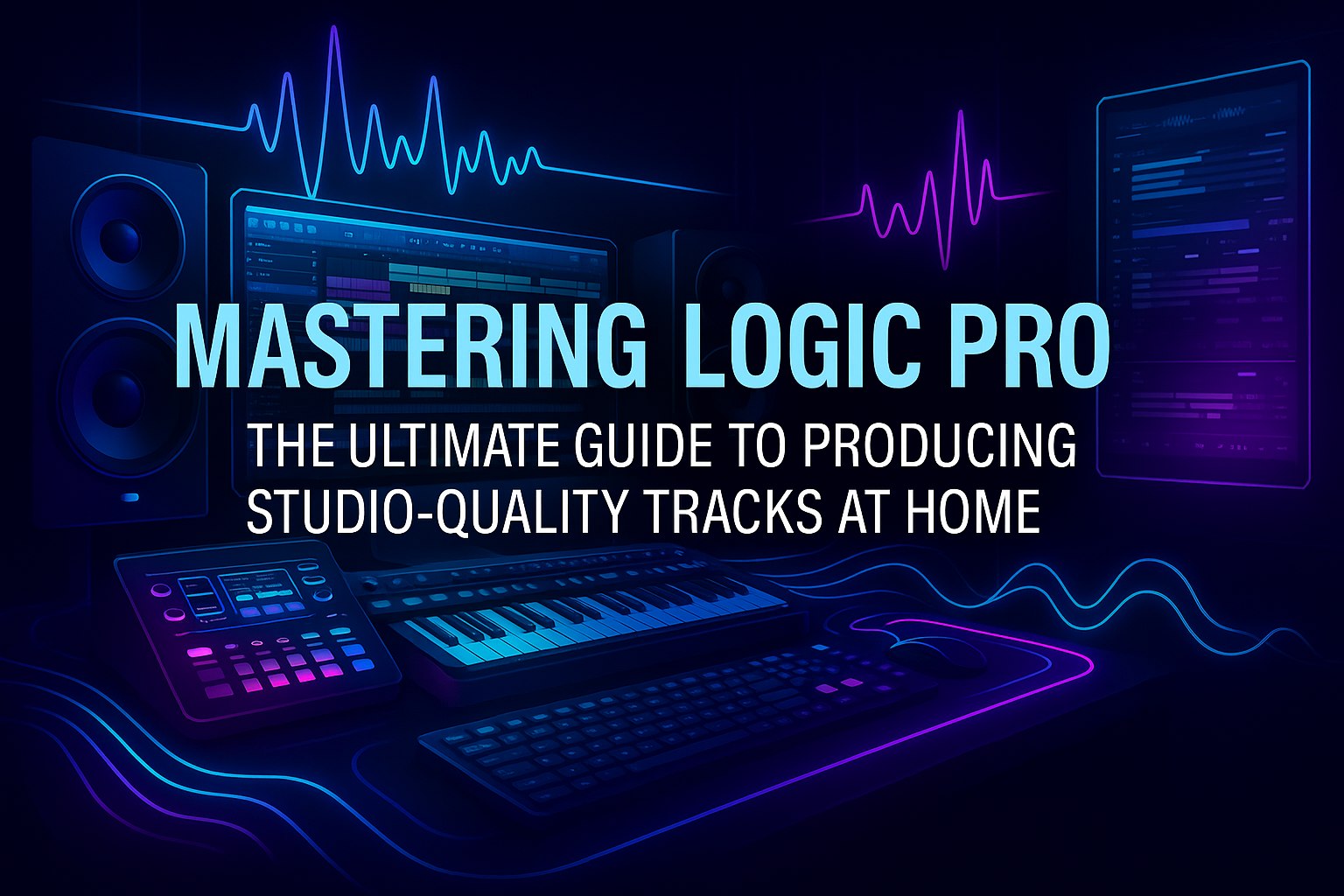
Mastering Logic Pro: The Ultimate Guide to Producing Studio-Quality Tracks at Home
In the age of digital creativity, professional music production is no longer confined to expensive studios. With Logic Pro, artists and producers can craft studio-quality sound right from their home setups. Apple’s flagship Digital Audio Workstation (DAW) empowers musicians to compose, mix, and master music with precision tools and intuitive workflows. Whether you’re a beginner or a seasoned producer, mastering Logic Pro can elevate your sound to a whole new level.
Getting Started with Logic Pro
Logic Pro is designed for both simplicity and depth. Its clean interface hides an enormous amount of power. Once installed, take time to explore its main workspace: the Tracks Area, Mixer, and Library. Start by creating a new project and choosing a template suited for your genre — electronic, acoustic, or cinematic. Logic Pro’s Smart Controls allow you to tweak parameters instantly, helping you shape your sound efficiently.
Building Your First Track
Begin with a simple loop or melody. Logic Pro includes over 70GB of sounds, instruments, and Apple Loops, so you can experiment freely. Try layering instruments using the Software Instrument tracks and adjust your timing with the built-in quantization tool. Use the Piano Roll and Step Sequencer to refine your rhythm and melody structure. This is where creativity meets precision — Logic’s interface encourages experimentation while keeping production smooth.
Exploring Logic’s Stock Instruments and Plugins
Logic Pro’s strength lies in its extensive range of built-in instruments and effects. From Alchemy — the powerhouse synth — to Drum Machine Designer, and Retro Synth, there’s no shortage of sound possibilities. The included Space Designer reverb and Chromaverb add depth to your mix, while compressors and limiters help you polish the final output. Learning to combine these plugins creatively is key to achieving that signature ‘pro’ sound.
Mixing Like a Pro
Mixing is where raw recordings evolve into polished tracks. Start by balancing levels across all your instruments. Use EQ to carve space for each sound — cutting low frequencies where unnecessary and boosting clarity where needed. Add subtle compression to control dynamics and apply stereo panning to widen your soundscape. Logic’s Mixer provides real-time metering and flexible routing options, allowing you to perfect your mix with surgical precision.
Mastering in Logic Pro
Mastering ensures your track sounds consistent and powerful across all playback systems. Logic Pro’s Mastering Assistant, coupled with Linear Phase EQ and Adaptive Limiter, helps refine your mix for streaming and live playback. Focus on achieving clarity, loudness balance, and tonal depth. Always A/B test your mix with reference tracks to ensure it competes sonically with commercial releases.
Using Automation to Add Emotion
Automation in Logic Pro is one of its most expressive features. By controlling volume, pan, reverb, or any plugin parameter over time, you can add motion and emotion to your track. For example, automate a filter sweep to build tension or reduce reverb for a crisp ending. Automation transforms static mixes into living, breathing soundscapes.
Optimizing Workflow with Shortcuts and Templates
Efficiency matters in production. Logic Pro offers a range of keyboard shortcuts and customizable templates that save time during repetitive tasks. Create templates for different project types — podcasts, beats, or orchestral scores — so you can start producing faster. Use Logic Remote on your iPad to control sessions wirelessly, turning your setup into a seamless creative hub.
Collaborating and Sharing Projects
Collaboration is easier than ever. With Logic’s integrated iCloud and project file management, you can share stems, mixes, or entire sessions with collaborators worldwide. Exporting to GarageBand for iOS lets you continue projects on the go, and integration with platforms like SoundCloud simplifies publishing your final track. This flexibility makes Logic Pro ideal for modern, distributed music production workflows.
Conclusion
Logic Pro is more than a DAW — it’s a creative ecosystem built for innovation. By mastering its tools, producers can achieve professional-grade sound without stepping into a traditional studio. In the hands of passionate creators, Logic Pro turns ideas into immersive audio experiences — blending technology, art, and imagination.
-
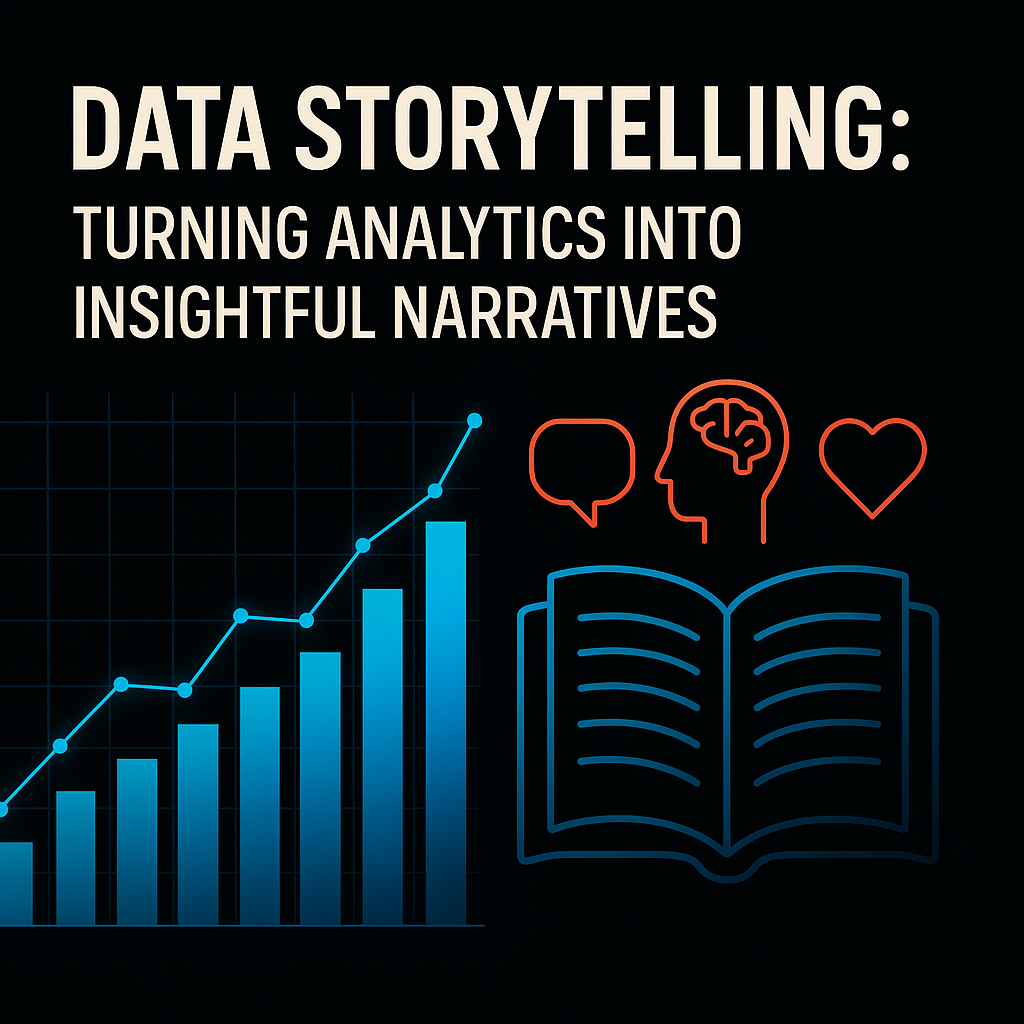
Data Storytelling: How Analytics is Evolving from Numbers to Narratives
Data has become the language of modern decision-making. But raw numbers alone rarely inspire action. In the age of information overload, the most impactful insights come from how we communicate them. That’s where data storytelling comes in — the art of turning analytics into compelling narratives that connect logic with emotion. By blending visualization, language, and human context, data storytelling transforms spreadsheets into stories that move people.
What is Data Storytelling?
Data storytelling is the practice of combining data, visuals, and narrative techniques to communicate insights effectively. Instead of presenting isolated charts, it contextualizes data within a story arc — defining the problem, showing the journey, and leading to actionable outcomes. This approach makes data not just understandable, but memorable. It bridges the gap between analysts and decision-makers by translating statistics into meaning.
The Three Pillars of Data Storytelling
Great data stories rest on three pillars: data, narrative, and visuals. Data provides credibility — the factual foundation. The narrative gives direction — defining the ‘why’ behind the numbers. Visuals bring clarity and emotional connection — allowing patterns to emerge at a glance. When these three work in harmony, analytics becomes a universal language that speaks to both the mind and heart.
Why Data Alone Isn’t Enough
A dataset may reveal trends, but it doesn’t inherently explain them. Humans are wired to process stories more effectively than statistics. Research shows that people remember stories up to 22 times more than standalone facts. Without narrative framing, insights often get lost in dashboards or ignored altogether. Data storytelling bridges this gap by providing emotional context — helping audiences understand not just what is happening, but why it matters.
The Role of Visualization in Data Storytelling
Visualization is the visual heartbeat of every good data story. Charts, maps, and infographics simplify complex data, allowing insights to surface intuitively. But design matters — too much detail can overwhelm, while too little can mislead. Effective visual storytelling uses color, contrast, and hierarchy strategically, guiding the viewer’s eye through a logical flow. Tools like Tableau, Power BI, and D3.js have made this process more accessible, empowering analysts to become designers of insight.
From Dashboards to Stories
Traditional dashboards focus on presenting data, while data stories focus on communicating meaning. For example, a dashboard might show a 15% increase in churn rate — but a data story explains why it happened, what it means for customers, and what actions can reduce it. This narrative-driven approach aligns analytics with strategy, helping leaders make informed, empathetic decisions.
AI and the Future of Automated Storytelling
Artificial Intelligence is redefining how stories are built from data. Natural Language Generation (NLG) tools like Narrative Science and OpenAI’s models can automatically generate insights from datasets, crafting human-like summaries and recommendations. As AI matures, it will allow real-time, personalized storytelling — where dashboards evolve dynamically based on user behavior and preference. However, the human touch — emotion, empathy, and cultural nuance — will always remain the essence of storytelling.
Building a Culture of Data Storytellers
Organizations that thrive on analytics don’t just invest in tools; they nurture storytellers. Data literacy is no longer about creating charts — it’s about communicating insights with clarity and purpose. Analysts, marketers, and leaders must all learn to weave data into narratives that inspire belief and action. Training teams to tell stories with data fosters collaboration, transparency, and creativity across every level of the business.
Conclusion
Data storytelling marks a shift from information to inspiration. It transforms analytics from static reports into living narratives that drive impact. In an era where every organization has access to data, the true differentiator lies in how you tell its story. By mastering the balance of logic and emotion, businesses can turn numbers into narratives — and insight into action.
-
The Science of Sound: How Frequencies Shape Emotion in Music
Music has the unique ability to move us — to make us feel joy, sadness, nostalgia, or excitement within seconds. But beneath every melody lies a powerful scientific truth: sound frequencies directly influence how we feel. From the deep resonance of a bass note to the delicate shimmer of a high violin tone, each frequency interacts with our brain and body in ways that are both measurable and emotional.
Understanding Sound Frequencies
Sound is vibration — energy traveling through air in the form of waves. Each sound wave has a specific frequency, measured in hertz (Hz), that determines its pitch. Low frequencies (20–250 Hz) produce deep bass tones, while high frequencies (2,000–20,000 Hz) create sharp, bright sounds. When combined, these frequencies form the harmonic foundation of all music, giving each composition its emotional depth and texture.
How Frequencies Affect Emotion
Different frequencies trigger unique emotional responses. Low tones often evoke feelings of power, tension, or melancholy, while mid-range frequencies feel warm and familiar. High frequencies, on the other hand, can stimulate excitement and alertness. Our brains process these vibrations through the auditory cortex and limbic system — regions responsible for emotional memory and mood.
The Science Behind Musical Emotion
Researchers have found that certain frequencies can synchronize brain waves, influencing mental states like relaxation or focus. For example, alpha waves (8–14 Hz) are linked to calmness, while beta waves (14–30 Hz) promote alert thinking. This explains why ambient music often uses repetitive low-frequency pulses, while upbeat pop tracks emphasize bright, high-pitched elements.
Resonance and the Human Body
Our bodies don’t just hear sound — they feel it. Low-frequency vibrations resonate through muscles and bones, affecting heart rate and breathing. Sound therapy and binaural beats exploit this by targeting specific frequency ranges to promote relaxation, healing, or focus. It’s no coincidence that meditation music centers around 432 Hz — a tone believed to harmonize with natural human rhythms.
Cultural Interpretations of Frequency
Across cultures, frequencies have carried symbolic and spiritual meanings. Ancient Greek philosophers like Pythagoras believed that the universe itself was built on mathematical harmony — the ‘music of the spheres.’ In Indian classical music, each raga is tuned to specific tonal structures intended to evoke emotions like devotion, love, or longing. Even modern film composers use frequency layering to manipulate emotional intensity.
Technology and Emotional Sound Design
In the digital era, producers and engineers use advanced software to sculpt frequencies with precision. Equalizers, compressors, and spectral analyzers allow fine-tuning of emotional impact — boosting warmth in vocals or deepening the cinematic rumble of bass. AI-based mastering tools now analyze tracks to enhance emotional resonance automatically, showing how technology and artistry can work hand in hand.
The Future of Emotional Music
With neuroscience, AI, and acoustic research converging, we’re entering an era where music could be personalized to our emotions in real time. Imagine playlists that adapt to your heartbeat, or soundscapes that evolve based on mood sensors. As we learn more about how frequencies affect emotion, music will become an even more immersive extension of the human experience.
Conclusion
The relationship between sound frequencies and emotion is both scientific and spiritual. Every tone carries energy that resonates with our biology and consciousness. As artists and technologists explore this intersection further, music will continue to transcend entertainment — becoming a bridge between science, feeling, and the essence of being human.