Author: bhaskars1315

  • The Rise of Bio-Digital Twins: Predicting the Future of Human Health

    The Rise of Bio-Digital Twins: Predicting the Future of Human Health

    The future of healthcare is not just about treating illness — it’s about predicting and preventing it. At the center of this transformation lies one of the most groundbreaking technologies of the decade: Bio-Digital Twins. By combining biological data, artificial intelligence, and real-time analytics, these digital replicas of human systems are poised to revolutionize how we understand, monitor, and improve health.

    What Are Bio-Digital Twins?

    A Bio-Digital Twin is a virtual model of a biological system — such as an organ, a cell, or an entire human body — that mirrors its physical counterpart in real time. This twin is powered by continuous streams of data collected from sensors, wearables, and medical devices. Through advanced simulations, doctors can test treatments, monitor responses, and predict health outcomes long before symptoms appear.

    How Bio-Digital Twins Work

    The concept builds on the same principles used in aerospace and manufacturing digital twins. In healthcare, it integrates genomics, AI-driven modeling, and biometric data to create a living digital replica. Machine learning algorithms continuously learn from patient-specific data — blood pressure, oxygen levels, neural activity — and update the model in real time. This allows physicians to simulate how an individual might respond to a specific drug or surgery.

    Applications in Healthcare

    The applications of Bio-Digital Twins extend across every field of medicine. Cardiologists can create a digital replica of the heart to test new procedures. Oncologists can simulate cancer growth and treatment response without exposing patients to experimental risks. Even pharmaceutical companies can use these digital replicas to accelerate drug discovery and reduce clinical trial costs.

    AI: The Engine Behind the Twin

    Artificial intelligence is what makes Bio-Digital Twins truly dynamic. AI algorithms analyze massive datasets from electronic health records, genetic sequencing, and patient wearables. They continuously learn to detect anomalies, predict diseases, and recommend personalized therapies. The integration of deep learning with physiological modeling allows these systems to evolve and adapt over time — just like the human body.

    Ethical and Privacy Challenges

    With every innovation comes responsibility. The creation of Bio-Digital Twins raises critical ethical questions about data privacy, consent, and control. Who owns your digital self? How can we ensure that health data used for simulation isn’t misused or commercialized? As regulations catch up, the healthcare industry must ensure transparency, accountability, and data protection as foundational principles.

    From Personalized Medicine to Preventive Care

    Bio-Digital Twins take personalized medicine to the next level. Instead of reacting to illness, healthcare becomes predictive. A person’s digital twin can detect subtle physiological changes that might indicate early signs of disease, prompting preventive intervention. This shift could drastically reduce hospitalizations, healthcare costs, and the global burden of chronic illness.

    Beyond Medicine: A Bio-Digital Future

    The concept of Bio-Digital Twins extends beyond human health. In sports, athletes can use them to optimize performance and recovery. In urban planning, digital human populations could simulate public health outcomes before major infrastructure projects. Even mental wellness could benefit as AI learns to model emotional states and stress responses, offering new insights into human behavior.

    Conclusion

    Bio-Digital Twins are redefining the boundaries of healthcare and human understanding. They represent a future where medicine is proactive, precise, and deeply personal. As AI continues to advance and ethical frameworks mature, our digital counterparts may become the most powerful tools in maintaining and enhancing human life. The question is no longer whether Bio-Digital Twins will change healthcare — but how soon we’ll all have one.
  • The Future of Sound Design: How AI is Composing Emotion

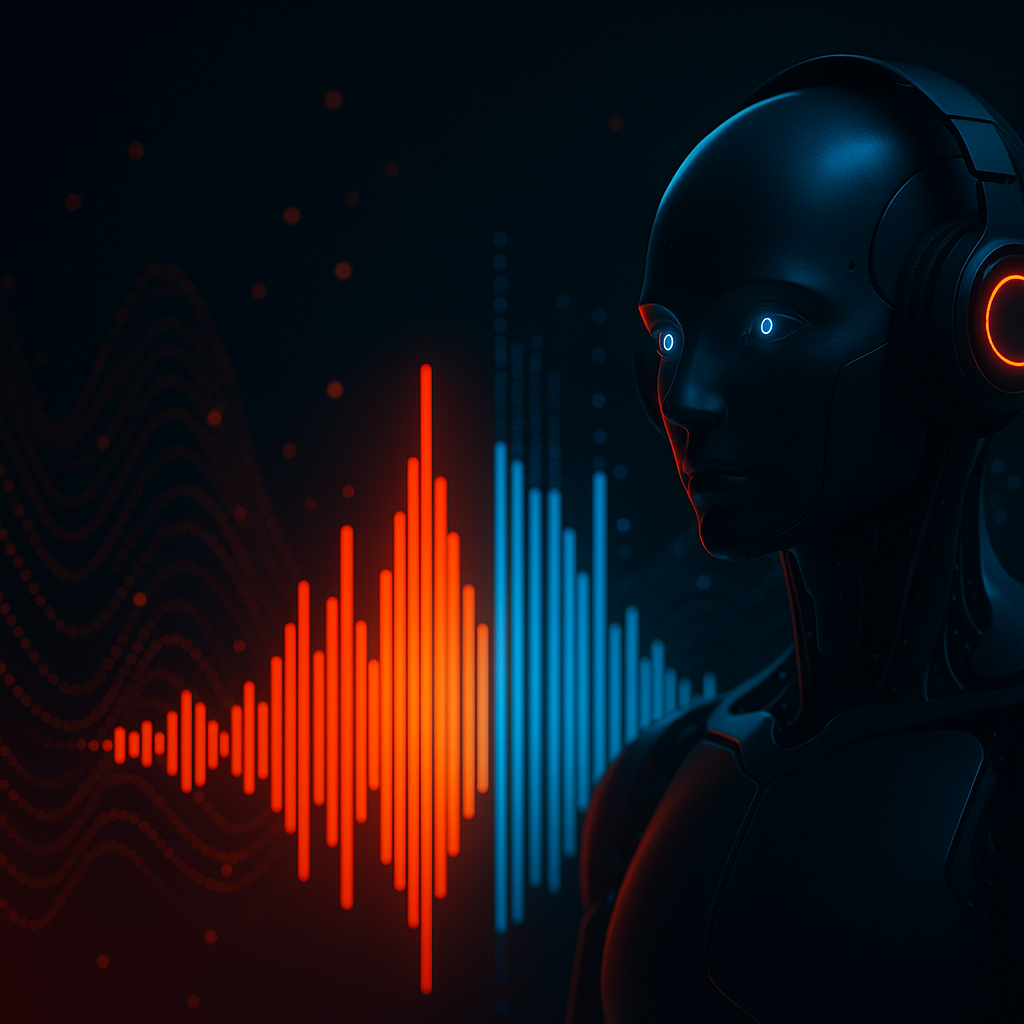
    The Future of Sound Design: How AI is Composing Emotion

    Artificial intelligence has already redefined how we write, paint, and communicate — but now it’s learning to feel. In the world of music production, AI isn’t just mixing tracks or recommending playlists; it’s beginning to understand emotion, tone, and intention. The next revolution in music isn’t about replacing artists — it’s about empowering them through intelligent sound design.

    What Is AI Sound Design?

    AI sound design refers to the use of machine learning algorithms and neural networks to create, modify, and enhance audio. Instead of manually tweaking knobs or layering sounds, producers can now collaborate with AI systems trained on massive libraries of audio data. These systems learn timbre, texture, and rhythm patterns to generate unique, human-like sounds.

    How AI Creates Emotion Through Sound

    Music has always been emotional, but teaching machines to understand emotion is one of the greatest challenges in AI. Advanced models like OpenAI’s Jukebox, Google’s Magenta, and Sony’s Flow Machines can now recognize patterns of emotion across genres — from melancholy piano tones to euphoric electronic buildups. By analyzing acoustic features like pitch, tempo, and harmony, AI systems can compose music that evokes specific emotional responses.

    Collaboration Between Humans and Machines

    Rather than competing with human creativity, AI sound design acts as a collaborator. Producers use AI tools to inspire new directions, suggest chord progressions, or create atmospheric textures. Artists like Taryn Southern and Holly Herndon have already released albums co-composed with AI models, proving that machine creativity can enhance, not replace, artistic expression.

    The Role of Neural Networks in Sound Design

    Deep learning models called neural networks form the foundation of modern AI sound design. They analyze vast datasets of musical compositions and audio samples to learn relationships between notes, rhythms, and harmonics. Generative Adversarial Networks (GANs) can even produce new soundscapes that don’t exist in nature, bridging the gap between synthetic and organic sound.

    AI Sound Design in Film, Gaming, and VR

    In immersive media like film, gaming, and virtual reality, AI-driven sound engines are transforming the listening experience. They can adapt soundtracks in real time based on a user’s emotions or actions — intensifying tension during gameplay or calming the mood in meditative VR experiences. This dynamic interaction redefines sound design as a living, responsive layer of storytelling.

    The Creative Edge

    AI sound design gives creators a new kind of instrument — one that listens and learns. Musicians can sculpt tones with descriptive prompts, producers can refine mixes through AI mastering assistants, and composers can generate harmonies aligned with their vision. It’s not automation; it’s amplification — expanding what artists can imagine and produce.

    Challenges and Ethical Concerns

    As AI starts generating original music, questions of ownership and authorship emerge. Should AI-created works be copyrighted? If an algorithm trained on existing songs produces something new, who owns it — the developer, the artist, or the data source? Balancing innovation with ethics will define the long-term future of AI music creation.

    The Future of Music Creation

    The future of AI sound design lies in co-creation. Soon, AI models will learn individual artistic styles, adapting to personal preferences for rhythm, tone, and structure. Imagine an AI collaborator that anticipates your next chord, understands your creative energy, and evolves with your growth — merging intuition with intelligence.

    Conclusion

    AI sound design is not about replacing emotion — it’s about decoding and enhancing it. By merging computation with creativity, AI offers a new language for sound — one that listens, learns, and feels. The musicians of tomorrow won’t just play instruments; they’ll compose alongside algorithms, turning imagination directly into music.

  • Neural Interfaces: The Next Step Beyond Smartphones

    Neural Interfaces: The Next Step Beyond Smartphones

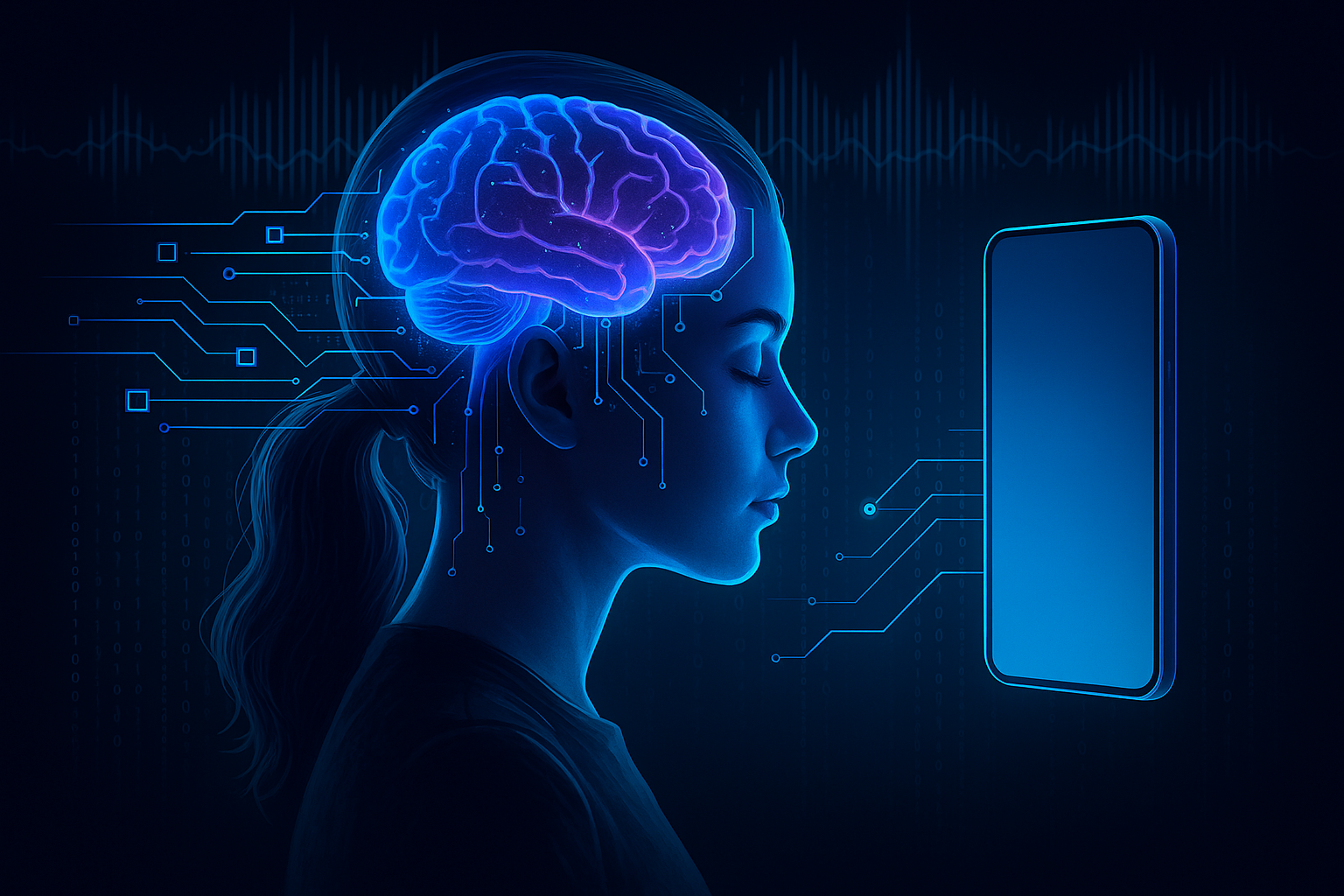
    The era of touchscreens may soon give way to something far more intuitive — Neural Interfaces. Imagine controlling your phone, car, or computer simply by thinking about it. This emerging field of technology is redefining how humans and machines interact, bridging biology and digital systems in ways that once belonged only in science fiction.

    Understanding Neural Interfaces

    Neural interfaces, or brain-computer interfaces (BCIs), allow direct communication between the brain and external devices. Using electrodes that detect brain signals, these systems interpret neural activity and translate it into digital commands. In simple terms, they let your mind speak to machines — and those machines understand you.

    From Research Labs to Real Life

    Once confined to neuroscience research, neural interfaces are now entering practical applications. Companies like Neuralink, Kernel, and Synchron are building implantable and non-invasive systems that can restore mobility to paralyzed patients, enhance memory, and extend human capabilities. In 2024, Synchron’s BCI enabled patients to control devices using thought alone — a breakthrough moment in medical technology.

    How Neural Interfaces Work

    Neural interfaces capture electrical signals generated by neurons and translate them using AI-powered decoding algorithms. When someone imagines moving their hand, for example, the system interprets the signal and moves a robotic arm. Over time, the system learns and adapts to the user’s neural patterns, creating an increasingly seamless connection between thought and action.

    Beyond Smartphones: A New Interaction Era

    The next decade may see neural interfaces replacing touchscreens and voice assistants as our main mode of interaction. Imagine sending messages, browsing the web, or composing music — all powered by thought. Unlike traditional interfaces, neural systems remove friction completely, enabling natural, instant communication between mind and machine.

    Ethical and Security Considerations

    Despite their promise, neural interfaces raise significant ethical questions. Who owns your brain data? How can we ensure neural information remains private? Security and consent will play a defining role in shaping how society adopts these technologies responsibly.

    Creative Possibilities

    For creators, musicians, and artists, neural interfaces open up unprecedented opportunities. Composing a melody directly from emotional patterns or designing visuals through imagination could become reality. These innovations align perfectly with The Bhaskars’ philosophy — blending human creativity with intelligent technology.

    The Road Ahead

    Neural interfaces are still in their infancy, but rapid advancements are bringing them closer to mainstream adoption. Miniaturized hardware, better AI models, and improved signal accuracy are setting the stage for widespread use. In the near future, they might not just assist humans — they could expand what it means to be human.

    Conclusion

    Neural interfaces represent the next great leap in human-computer interaction. They blur the boundary between human intent and digital execution, redefining how we live, create, and communicate. As we move beyond screens and into seamless mind-machine connectivity, the technology of tomorrow may be powered not by touch — but by thought.

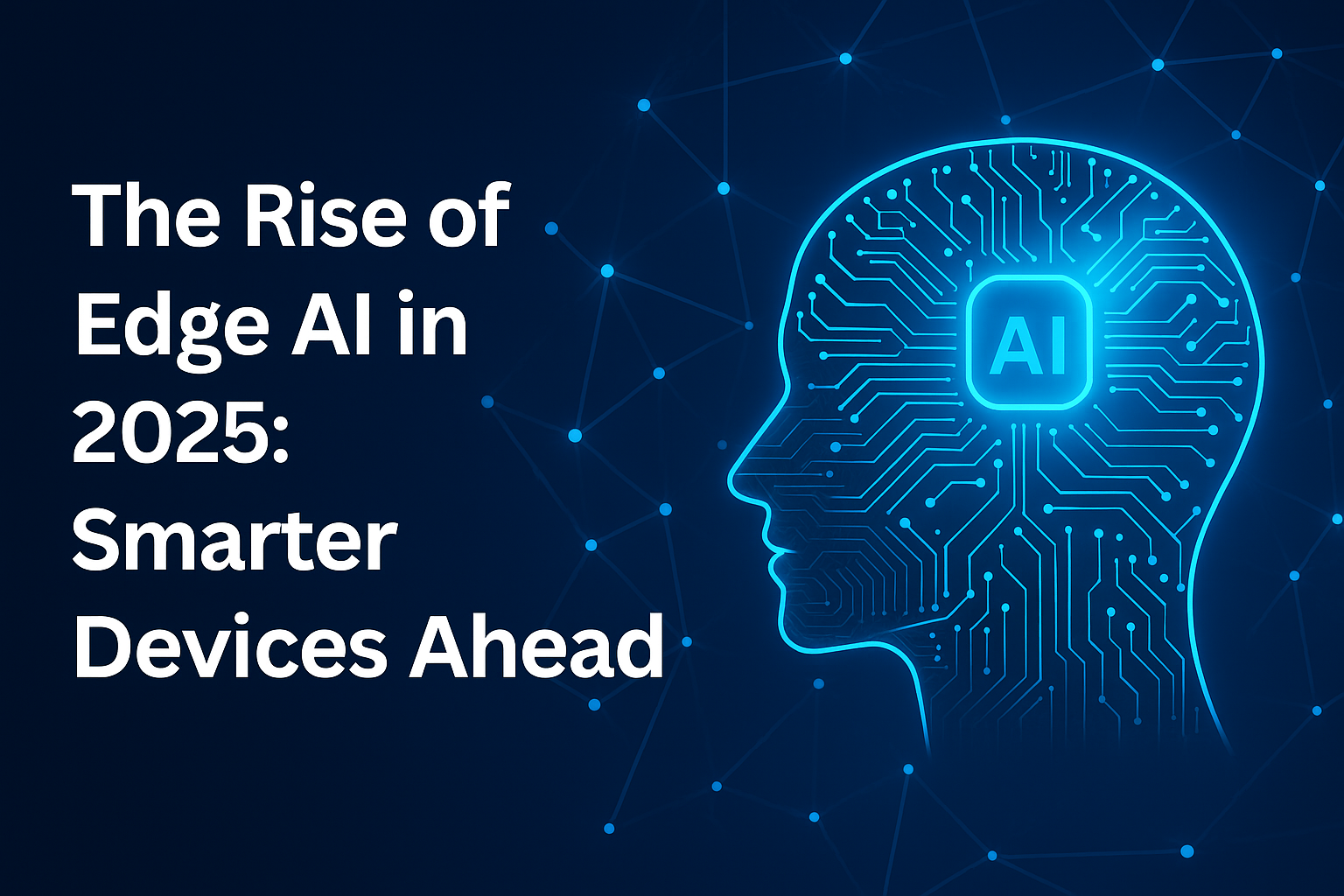
  • The Rise of Edge AI in 2025: Smarter Devices Ahead

    The Rise of Edge AI in 2025: Smarter Devices Ahead

    Edge AI in 2025 is transforming how intelligent systems operate across industries. Unlike traditional cloud-based artificial intelligence, Edge AI processes data locally on devices—from smartphones to self-driving cars—without needing constant internet connectivity. This evolution enables faster decision-making, better privacy, and reduced dependency on large data centers. Edge AI represents the next step in distributed intelligence, making technology more efficient, adaptive, and personal.

    What Is Edge AI?

    Edge AI, short for Edge Artificial Intelligence, refers to running AI algorithms directly on hardware devices instead of relying on remote cloud servers. This approach leverages embedded chips, sensors, and specialized processors capable of executing complex models locally. The advantage of Edge AI lies in its ability to process data in real time, even in low-connectivity environments, providing instant responses critical for safety and automation.

    Why Edge AI Matters in 2025

    By 2025, Edge AI has moved from experimental to essential. With billions of connected devices worldwide, the volume of data generated every second is overwhelming traditional cloud infrastructures. Processing this information locally not only saves bandwidth but also enhances security. As organizations embrace Edge AI, users gain faster, smarter, and more reliable device performance.

    Real-World Applications of Edge AI

    • Smartphones: On-device AI enables instant translation, facial recognition, and camera enhancements without cloud delay.
    • Autonomous Vehicles: Cars use Edge AI to process sensor data for navigation, obstacle detection, and collision avoidance.
    • Healthcare: Wearables monitor vital signs in real time and alert doctors about anomalies instantly.
    • Manufacturing: Predictive maintenance systems analyze machine health and prevent downtime locally.
    • Retail: Smart checkout systems recognize products and track inventory without human input.

    Benefits of Edge AI

    1. Speed: Real-time data processing with minimal latency.
    2. Privacy: Sensitive information stays on the device instead of being sent to external servers.
    3. Reliability: Edge AI continues to function even without internet access.
    4. Energy Efficiency: Reduced data transmission saves power and bandwidth.
    5. Scalability: Millions of devices can operate independently without overloading central systems.

    Challenges and Limitations

    Despite its promise, Edge AI faces several challenges. Developing compact yet powerful AI models that fit within hardware constraints requires advanced optimization. Maintaining consistent performance across diverse devices and ensuring software updates remain secure are ongoing challenges. Additionally, interoperability between hardware vendors and AI frameworks must improve to ensure seamless deployment.

    The Future of Edge AI

    The future of Edge AI in 2025 and beyond lies in hybrid intelligence—balancing the strengths of local and cloud processing. Advancements in neuromorphic chips and federated learning will make devices smarter over time while preserving user privacy. Edge AI will drive innovation in autonomous systems, IoT, and robotics, setting the foundation for decentralized intelligence networks. As computing moves closer to where data is generated, Edge AI will redefine how we interact with technology daily.

    Conclusion

    Edge AI in 2025 represents a crucial evolution in artificial intelligence—bringing computation, decision-making, and intelligence closer to users. By reducing dependence on centralized systems, it delivers faster, more secure, and energy-efficient experiences. From healthcare to transportation, Edge AI empowers the next generation of connected technology, shaping a future that is truly smart and responsive.

  • The Future of Quantum Computing and AI in 2025

    The Future of Quantum Computing and AI in 2025

    Quantum computing and AI in 2025 are together shaping the next technological revolution. While artificial intelligence helps systems learn and reason, quantum computing provides the raw computational power to solve problems once thought impossible. The convergence of these two domains is transforming industries such as healthcare, finance, cybersecurity, and climate science. Understanding how quantum computing and AI complement each other is essential for predicting the innovations that lie ahead.

    What Is Quantum Computing?

    Quantum computing is a new paradigm that uses the principles of quantum mechanics to perform complex calculations at incredible speeds. Instead of using bits that exist as 0 or 1, quantum computers use qubits that can exist in multiple states simultaneously. This property, called superposition, allows quantum systems to process vast amounts of data in parallel, giving them exponential advantages over classical machines.

    How Quantum Computing Enhances AI

    Quantum computing and AI together promise to accelerate model training and decision-making. Current AI systems require enormous computing power to process high-dimensional data. Quantum algorithms, such as quantum machine learning (QML), can significantly reduce training time by evaluating multiple possibilities simultaneously. This means that tasks like image recognition, natural language processing, and molecular simulations will become faster and more accurate.

    Real-World Applications in 2025

    • Healthcare: Quantum computing and AI will analyze genetic data to design personalized medicines.
    • Finance: Quantum algorithms will optimize trading strategies and manage portfolio risks in real time.
    • Cybersecurity: Quantum encryption will secure data transmission against even the most advanced attacks.
    • Climate Science: Quantum simulations will help predict environmental patterns and model global warming scenarios.
    • Manufacturing: AI-driven quantum models will optimize production lines for efficiency and minimal waste.

    Benefits of Quantum Computing and AI Integration

    1. Speed: Quantum algorithms can process massive datasets exponentially faster.
    2. Accuracy: AI models enhanced by quantum systems can reduce errors in predictions.
    3. Optimization: Businesses can simulate millions of outcomes simultaneously for better decision-making.
    4. Innovation: The synergy between quantum computing and AI opens new frontiers in materials, robotics, and automation.

    Challenges to Overcome

    Despite their potential, quantum computing and AI still face several hurdles. Quantum computers remain extremely expensive and difficult to maintain due to the need for near-zero temperature environments. Developing quantum algorithms that outperform classical systems is also a significant challenge. Moreover, ethical concerns around AI bias and the potential misuse of quantum-enhanced systems must be addressed through regulation and transparency.

    The Future of Quantum Computing and AI

    By 2025 and beyond, hybrid architectures combining classical, quantum, and AI systems will become mainstream. Tech giants are already investing heavily in quantum processors integrated with AI frameworks. In the next decade, developers will have access to cloud-based quantum computing platforms to train models and simulate scenarios once deemed impossible. As algorithms evolve, quantum computing and AI will jointly redefine automation, creativity, and problem-solving.

    Conclusion

    Quantum computing and AI in 2025 represent the most transformative partnership in modern technology. Their integration will not only accelerate innovation but also reshape entire industries. From faster scientific discoveries to smarter cities, the fusion of quantum computing and AI will push the boundaries of what humanity can achieve. The future belongs to those who learn to harness this power responsibly.

  • The Rise of Independent Music in 2025

    The Rise of Independent Music in 2025

    The rise of independent music in 2025 marks a turning point in the global music industry. With digital platforms, affordable production tools, and social media, artists are no longer dependent on traditional record labels. Independent music has become a movement powered by technology, enabling musicians to create, distribute, and promote their work directly to listeners.

    Evolution of Independent Music

    Independent music has existed for decades, but until recently, it lacked mainstream exposure. Earlier, record labels controlled distribution, production budgets, and marketing access. Today, digital democratization allows any artist with a laptop and vision to share music globally. Streaming platforms like Spotify and Apple Music have leveled the field, allowing independent musicians to reach millions without middlemen.

    How Technology Empowers Independent Artists

    Technology has become the backbone of independent music creation. Artists now use AI-assisted tools for songwriting, beat production, and mastering. Music software such as Ableton Live and Logic Pro integrates machine learning features that adjust sound balance automatically. AI in Music Production helps artists perfect their mixes while reducing studio costs. Furthermore, platforms like SoundCloud and Bandcamp let musicians distribute songs directly and receive instant feedback from fans.

    Direct-to-Fan Connection

    Independent musicians thrive on building genuine relationships with listeners. Through social media and digital fan communities, artists can promote upcoming releases, sell merchandise, and host virtual concerts. Platforms like Patreon and YouTube enable a steady income stream through subscriptions and live performance monetization. This direct model makes independent music more personal and sustainable.

    The Role of Streaming and Analytics

    Streaming services not only distribute independent music but also provide valuable listener data. Analytics tools allow artists to track which songs resonate most with audiences, optimize release schedules, and plan tours strategically. For the first time, musicians control both creative and business decisions based on real-time insights. Technology turns independent artists into entrepreneurs, merging creativity with strategy.

    Challenges Facing Independent Musicians

    Despite the advantages, independent music still faces challenges. Competition is fierce as thousands of songs are uploaded daily. Marketing remains a hurdle for artists without large budgets, and algorithm-driven platforms can limit visibility. Additionally, artists must balance time between creative output, promotion, and community management. However, emerging AI-driven discovery tools are making it easier for audiences to find niche sounds and new talent.

    Future of Independent Music

    The future of independent music looks more innovative than ever. AI-powered virtual studios will soon allow global collaborations in real time. Blockchain and NFTs are transforming how royalties are distributed, ensuring transparency and fair compensation. Virtual concerts in the metaverse will expand fan engagement beyond physical boundaries. Independent music is evolving into a self-sustaining ecosystem where creativity meets technology seamlessly.

    Conclusion

    Independent music in 2025 represents freedom, creativity, and empowerment. Technology has given musicians the tools to compose, publish, and connect with their audience without gatekeepers. From AI in Music Production to blockchain-based payments, artists now have full control over their careers. The rise of independent music proves that when creativity meets innovation, the possibilities are limitless.

  • AI in Music Production 2025: Transforming Sound

    AI in Music Production 2025: Transforming Sound

    AI in Music Production is transforming how artists create, mix, and master music in 2025. With artificial intelligence built into digital audio workstations, musicians can compose complex tracks, automate mastering, and explore new creative directions faster than ever. AI in Music Production is not just a tool; it is a collaborator that helps artists shape the sound of the future with speed and precision.

    What Is AI in Music Production?

    AI in Music Production refers to the integration of machine learning and neural networks into the process of making music. These systems analyze large libraries of songs, patterns, and frequencies to help musicians generate beats, suggest chord progressions, and emulate instrument tones. Unlike fixed plugins, systems used for AI in Music Production learn over time and adapt to the style of the artist.

    How AI Is Revolutionizing Music Creation

    Producing a high‑quality track once required expensive equipment and expert knowledge. Today, AI in Music Production enables independent artists to achieve studio‑grade results at home. Intelligent assistants balance levels, apply effects, and recommend structural edits while machine learning models detect pitch issues, align vocals, and refine harmonies. The result is faster production without losing creative control.

    Real‑World Applications of AI in Music Production

    • Composition: tools generate melodies and drum patterns inspired by specific genres.
    • Sound design: neural synthesis creates unique timbres and evolving textures.
    • Mixing and mastering: assistants adjust EQ, compression, and loudness targets automatically.
    • Collaboration: artists guide systems with mood or lyric prompts to co‑create ideas.
    • Trend prediction: data models estimate what styles are likely to resonate with audiences.

    Benefits of Using AI in Music Production

    1. Speed: automated workflows reduce editing and mastering time.
    2. Precision: analysis catches frequency clashes and timing errors instantly.
    3. Creativity: suggested harmonies, rhythms, and textures encourage experimentation.
    4. Accessibility: artists without engineering backgrounds can reach professional quality.
    5. Cost efficiency: fewer studio hours and fewer revisions reduce overall spend.

    Challenges and Ethical Concerns

    Despite the promise of AI in Music Production, questions remain about originality and ownership. If a system contributes a melody, clarity is needed on rights and royalties. There is also the question of dataset quality; training on poorly labeled or biased material can lead to uninspiring results. Musicians who embrace AI in Music Production should treat it as an assistant, keep session notes about where algorithms contributed ideas, and preserve the human voice that defines their art.

    The Future of AI in Music Production

    The future of AI in Music Production will be even more conversational and context‑aware. Artists will describe a mood or reference a scene, and the system will propose changes to tempo, harmony, and instrumentation in real time. Emotion‑aware models will make music adaptive for games, film, and live shows. By the end of the decade, personalized assistants will understand an artist’s catalog, audience response, and sonic identity, making collaboration smoother while leaving final decisions to the creator.

    Conclusion

    AI in Music Production 2025 marks a shift from manual engineering to intelligent creation. By combining data‑driven insight with human taste, musicians can move from idea to release more quickly and with greater confidence. Used thoughtfully, AI in Music Production amplifies imagination, raises quality, and keeps the artist at the center of the process.

  • Hello world!

    Welcome to WordPress. This is your first post. Edit or delete it, then start writing!