
Category: Technology

  • Power BI Revolution: Turning Data into Decisions

    Power BI Revolution: Turning Data into Decisions


    In today’s digital world, data has become the new currency. Every organization, regardless of size or industry, generates enormous amounts of data every single day. Yet, without a structured way to interpret it, data remains just numbers. This is where Power BI — Microsoft’s flagship business intelligence tool — changes the game by turning raw data into meaningful insights that drive smart business decisions.

    Empowering Businesses with Data Visualization


    Power BI helps businesses visualize their data through interactive dashboards, rich charts, and customizable reports. It connects to hundreds of data sources — from Excel spreadsheets to cloud-based databases like Azure, Google BigQuery, and Salesforce — providing a unified view of your business metrics in one place. Decision-makers can easily identify patterns, trends, and outliers without needing deep technical expertise.

    AI-Powered Insights


    What sets Power BI apart is its integration with artificial intelligence. With built-in AI visuals, natural language queries (Q&A), and automated machine learning, Power BI allows users to ask questions about their data in plain English. This bridges the gap between complex analytics and everyday business needs, empowering everyone — from executives to analysts — to extract insights effortlessly.

    Real-Time Analytics and Automation


    Businesses no longer have to wait for static reports. Power BI’s real-time data streaming capabilities ensure live monitoring of KPIs, operational metrics, and customer engagement dashboards. The integration with Power Automate also enables workflow automation — for instance, sending alerts or generating reports automatically when specific thresholds are reached.

    Scalability and Security at Enterprise Level


    Whether you’re a startup tracking marketing performance or a Fortune 500 managing global supply chains, Power BI scales seamlessly. Its enterprise-grade security, data encryption, and compliance features ensure that sensitive information stays protected. Integration with Azure Active Directory further strengthens access control and governance.

    The Future of Business Intelligence


    As AI and automation continue to shape the analytics landscape, Power BI stands at the forefront. Its continued evolution with predictive modeling, enhanced visual storytelling, and collaborative dashboards positions it as an indispensable tool for modern enterprises.

    Power BI isn’t just about data visualization — it’s about enabling a culture of data-driven decision-making. In the coming years, organizations that harness tools like Power BI will lead industries by anticipating trends, optimizing performance, and innovating faster.
  • Modern Java: Why It Still Dominates the Enterprise Landscape in 2025

    Modern Java: Why It Still Dominates the Enterprise Landscape in 2025

    Even after more than two decades, Java continues to dominate enterprise software development. In 2025, it remains a cornerstone for building scalable, secure, and high-performance applications. Far from being outdated, modern Java has evolved dramatically, integrating new features, frameworks, and cloud-native capabilities that keep it relevant in the era of AI and microservices.

    Java’s Ongoing Evolution

    Java’s strength lies in its ability to evolve while maintaining backward compatibility. The release of JDK 21 introduced significant improvements — including virtual threads, record patterns, and enhanced switch expressions — all aimed at making development faster and more efficient. These updates are not just syntactic sugar; they represent a shift toward modern concurrency and lightweight architecture.

    Virtual Threads and Project Loom

    One of the most transformative changes in modern Java is the introduction of virtual threads through Project Loom. Traditional Java threads were resource-intensive, limiting scalability for high-concurrency applications. Virtual threads reduce overhead, enabling applications to handle thousands of concurrent tasks without performance bottlenecks. This makes Java ideal for cloud workloads, APIs, and reactive systems.

    Cloud-Native Java Frameworks

    Frameworks such as Spring Boot 3, Micronaut, and Quarkus have revolutionized how Java applications are built and deployed. They are optimized for containerized environments, integrating seamlessly with Kubernetes and serverless platforms. Spring Boot’s focus on observability and native image support ensures faster startup times and lower memory consumption — two key demands in modern microservice architectures.

    Java and Artificial Intelligence

    Java’s versatility now extends into the world of artificial intelligence and machine learning. Libraries like Deep Java Library (DJL), Tribuo, and integrations with TensorFlow and PyTorch allow developers to build AI-driven applications within familiar Java ecosystems. This convergence enables enterprises to leverage existing Java expertise while adopting cutting-edge AI capabilities.

    Security and Reliability

    Java’s robust security model remains one of its biggest advantages. Automatic memory management, strong typing, and extensive tooling make it less vulnerable to memory leaks and exploits. In enterprise environments where data integrity is non-negotiable, Java continues to provide unmatched reliability and compliance support.

    Developer Productivity and Tooling

    Modern IDEs such as IntelliJ IDEA, Eclipse, and Visual Studio Code provide smart refactoring, debugging, and real-time collaboration features. Coupled with build tools like Maven and Gradle, developers can automate workflows, integrate CI/CD pipelines, and ensure consistent delivery. Java’s extensive ecosystem continues to drive developer efficiency at scale.

    The Java Community and OpenJDK

    The global Java community, driven by OpenJDK, ensures the platform’s continuous evolution. Collaborations among Oracle, Red Hat, Amazon, and other contributors bring innovation and transparency to the ecosystem. This open-source governance model fosters rapid development cycles and long-term stability.

    The Future of Java

    Looking forward, Java’s trajectory remains strong. Its adaptability to AI, cloud computing, and edge processing ensures continued dominance in enterprise technology. The ongoing evolution of JVM performance, language simplification, and cross-language interoperability will cement its leadership well beyond 2025.

    Conclusion

    Java’s longevity isn’t accidental — it’s the result of constant reinvention. In 2025, modern Java stands as a bridge between legacy stability and future innovation. With advancements like virtual threads, AI integrations, and cloud-native frameworks, Java continues to prove that timeless design can thrive in a rapidly changing world.

  • Democratizing Data Science: How Automation Is Changing the Game

    Democratizing Data Science: How Automation Is Changing the Game

    Data science is no longer a niche discipline reserved for experts with deep programming skills. With the rise of automation, low-code platforms, and machine learning operations (MLOps), data science is becoming accessible to a broader audience. This democratization of data science is transforming how businesses build models, make predictions, and derive value from data.

    The Need for Democratization

    Organizations across industries recognize that data is their most valuable asset. However, a lack of skilled data scientists has created a bottleneck in leveraging it effectively. Automation helps bridge this gap by simplifying complex tasks like data cleaning, model building, and deployment — empowering analysts and domain experts to participate in the data science process.

    The Role of AutoML

    Automated Machine Learning (AutoML) is one of the most significant innovations driving this shift. AutoML tools automate repetitive steps such as feature engineering, algorithm selection, and hyperparameter tuning. Platforms like Google Vertex AI, H2O.ai, and DataRobot enable teams to build accurate models in hours rather than weeks, without sacrificing quality.

    The Rise of Low-Code and No-Code Tools

    Low-code and no-code platforms are expanding access to AI and analytics. Tools like Microsoft Power BI, KNIME, and RapidMiner allow business professionals to create data workflows and predictive models through drag-and-drop interfaces. This not only accelerates project timelines but also fosters collaboration between technical and non-technical teams.

    MLOps — Bringing Models to Life

    Building a model is just one part of the journey. Deploying, monitoring, and maintaining it in production is where true value lies. MLOps (Machine Learning Operations) extends DevOps principles to the world of AI — ensuring models remain accurate, compliant, and efficient throughout their lifecycle. Tools like MLflow, Kubeflow, and AWS SageMaker streamline this process, making continuous integration and delivery of ML models a reality.

    Collaboration and Accessibility

    Democratizing data science is also about enabling cross-functional collaboration. When data scientists, analysts, and business stakeholders can work together through unified platforms, innovation accelerates. Cloud-based notebooks, shared datasets, and open-source frameworks are breaking barriers that once separated departments.

    Challenges in Automated Data Science

    While automation simplifies workflows, it introduces new challenges. Overreliance on automated models without human validation can lead to biases or errors. Data governance, transparency, and interpretability must remain priorities to ensure responsible use of AI.

    The Future of Data Science Automation

    The next decade will see even greater integration between AI and automation. AI-assisted development tools will suggest model improvements, detect anomalies, and optimize pipelines automatically. Data science will no longer be limited to technical experts — it will become a universal language of business innovation.

    Conclusion

    Automation is democratizing data science, unlocking creativity across roles and industries. By blending human expertise with AI-powered tools, organizations can accelerate their analytics journey, make better decisions, and foster a culture of continuous learning. The future of data science isn’t about replacing people — it’s about empowering them.

  • The Future of Data Analytics: From Dashboards to Predictive Insights

    The Future of Data Analytics: From Dashboards to Predictive Insights

    Data analytics has come a long way from static dashboards and historical reporting. As businesses adapt to a rapidly changing world, the focus has shifted from describing the past to predicting the future. Predictive data analytics, powered by artificial intelligence and automation, is transforming how decisions are made — making insights faster, smarter, and more actionable.

    The Evolution of Data Analytics

    In the early 2000s, analytics was mostly descriptive — companies relied on dashboards and reports to understand what happened. Over time, diagnostic analytics helped explain why it happened. Now, predictive and prescriptive analytics help organizations anticipate what will happen next and what actions to take. This evolution marks the shift from hindsight to foresight.

    The Rise of Predictive and Prescriptive Insights

    Predictive analytics uses machine learning algorithms and statistical models to forecast future trends. Prescriptive analytics takes it further — recommending optimal actions based on data patterns. Together, they enable organizations to simulate scenarios, optimize operations, and proactively manage risks.

    For example, retailers forecast demand, logistics teams optimize delivery routes, and finance analysts anticipate market shifts using AI-driven models — all in real time.

    Real-Time Data and Automation

    The shift toward real-time analytics redefines operations. Technologies like Apache Kafka, AWS Kinesis, and Snowflake enable organizations to process and act on information instantly. Automation ensures alerts, workflow triggers, and dashboards respond dynamically to live data patterns.

    The Role of AI and Natural Language Processing

    Artificial intelligence lies at the heart of predictive analytics. Machine learning models uncover hidden patterns that traditional analytics miss. Natural Language Processing (NLP) lets users query insights using everyday language. Tools like Power BI’s Copilot, Tableau GPT, and ThoughtSpot make analytics accessible to everyone.

    From Dashboards to Decision Intelligence

    The next era of analytics is Decision Intelligence — merging AI, analytics, and human judgment. Instead of static dashboards, organizations will rely on adaptive systems that continuously learn and optimize outcomes. Data no longer just informs — it drives business transformation.

    Challenges in Predictive Analytics

    Despite its potential, predictive analytics faces challenges. Data silos, lack of skills, and governance issues hinder adoption. Over-reliance on automation without human oversight can cause biased outputs. Success requires integrating technology with ethical and human-centered decision-making.

    The Future of Predictive Data Analytics

    The next phase of predictive analytics will be defined by automation, intelligence, and accessibility. Edge computing will enable faster local predictions, while cloud-native models ensure scalability. AI-driven automation will make insights continuous, adaptive, and business-ready.

    Conclusion

    The future of data analytics lies in prediction, automation, and foresight. Businesses that embrace predictive data analytics will not only understand customers better but anticipate their needs before they arise. Analytics is no longer just about data — it’s about intelligent action.

  • Data Storytelling: How Analytics is Evolving from Numbers to Narratives

    Data Storytelling: How Analytics is Evolving from Numbers to Narratives

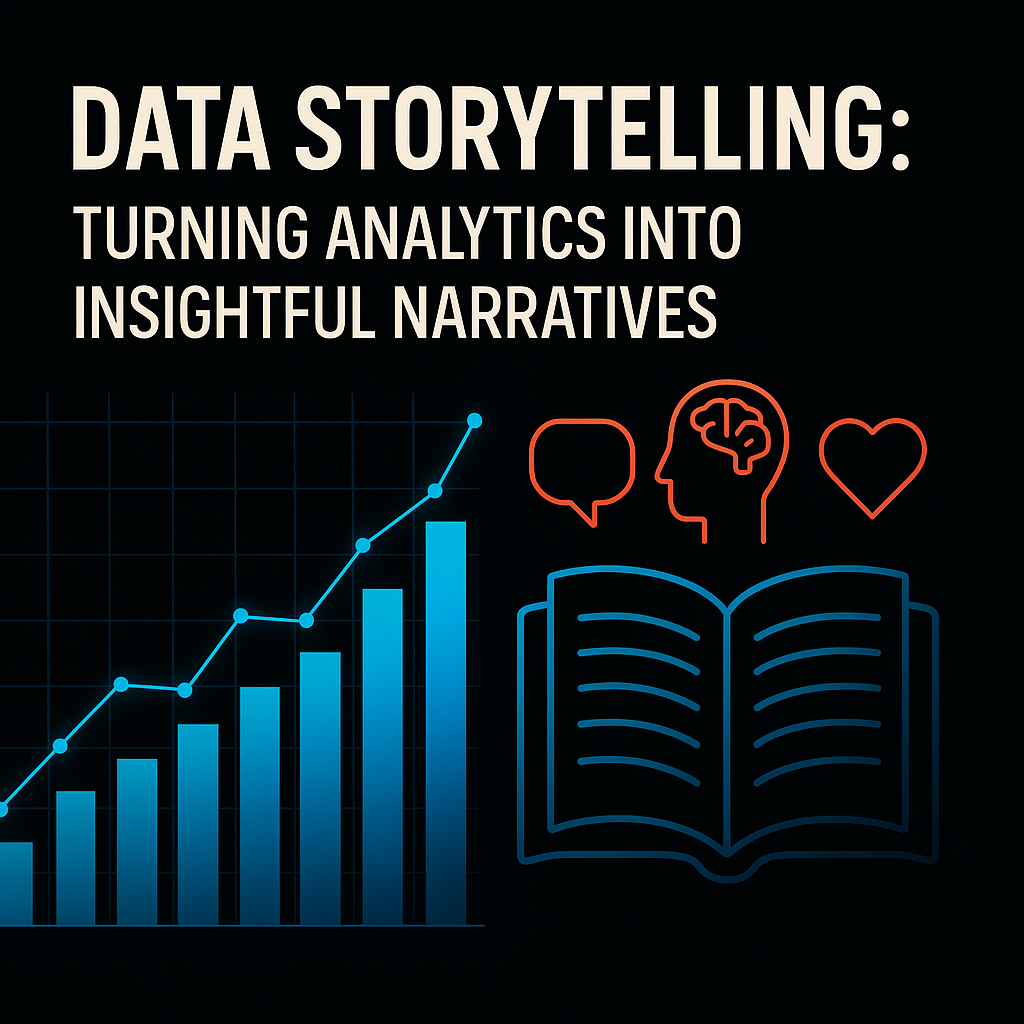
    Data has become the language of modern decision-making. But raw numbers alone rarely inspire action. In the age of information overload, the most impactful insights come from how we communicate them. That’s where data storytelling comes in — the art of turning analytics into compelling narratives that connect logic with emotion. By blending visualization, language, and human context, data storytelling transforms spreadsheets into stories that move people.

    What is Data Storytelling?

    Data storytelling is the practice of combining data, visuals, and narrative techniques to communicate insights effectively. Instead of presenting isolated charts, it contextualizes data within a story arc — defining the problem, showing the journey, and leading to actionable outcomes. This approach makes data not just understandable, but memorable. It bridges the gap between analysts and decision-makers by translating statistics into meaning.

    The Three Pillars of Data Storytelling

    Great data stories rest on three pillars: data, narrative, and visuals. Data provides credibility — the factual foundation. The narrative gives direction — defining the ‘why’ behind the numbers. Visuals bring clarity and emotional connection — allowing patterns to emerge at a glance. When these three work in harmony, analytics becomes a universal language that speaks to both the mind and heart.

    Why Data Alone Isn’t Enough

    A dataset may reveal trends, but it doesn’t inherently explain them. Humans are wired to process stories more effectively than statistics. Research shows that people remember stories up to 22 times more than standalone facts. Without narrative framing, insights often get lost in dashboards or ignored altogether. Data storytelling bridges this gap by providing emotional context — helping audiences understand not just what is happening, but why it matters.

    The Role of Visualization in Data Storytelling

    Visualization is the visual heartbeat of every good data story. Charts, maps, and infographics simplify complex data, allowing insights to surface intuitively. But design matters — too much detail can overwhelm, while too little can mislead. Effective visual storytelling uses color, contrast, and hierarchy strategically, guiding the viewer’s eye through a logical flow. Tools like Tableau, Power BI, and D3.js have made this process more accessible, empowering analysts to become designers of insight.

    From Dashboards to Stories

    Traditional dashboards focus on presenting data, while data stories focus on communicating meaning. For example, a dashboard might show a 15% increase in churn rate — but a data story explains why it happened, what it means for customers, and what actions can reduce it. This narrative-driven approach aligns analytics with strategy, helping leaders make informed, empathetic decisions.

    AI and the Future of Automated Storytelling

    Artificial Intelligence is redefining how stories are built from data. Natural Language Generation (NLG) tools like Narrative Science and OpenAI’s models can automatically generate insights from datasets, crafting human-like summaries and recommendations. As AI matures, it will allow real-time, personalized storytelling — where dashboards evolve dynamically based on user behavior and preference. However, the human touch — emotion, empathy, and cultural nuance — will always remain the essence of storytelling.

    Building a Culture of Data Storytellers

    Organizations that thrive on analytics don’t just invest in tools; they nurture storytellers. Data literacy is no longer about creating charts — it’s about communicating insights with clarity and purpose. Analysts, marketers, and leaders must all learn to weave data into narratives that inspire belief and action. Training teams to tell stories with data fosters collaboration, transparency, and creativity across every level of the business.

    Conclusion

    Data storytelling marks a shift from information to inspiration. It transforms analytics from static reports into living narratives that drive impact. In an era where every organization has access to data, the true differentiator lies in how you tell its story. By mastering the balance of logic and emotion, businesses can turn numbers into narratives — and insight into action.

  • The Rise of Bio-Digital Twins: Predicting the Future of Human Health

    The Rise of Bio-Digital Twins: Predicting the Future of Human Health

    The future of healthcare is not just about treating illness — it’s about predicting and preventing it. At the center of this transformation lies one of the most groundbreaking technologies of the decade: Bio-Digital Twins. By combining biological data, artificial intelligence, and real-time analytics, these digital replicas of human systems are poised to revolutionize how we understand, monitor, and improve health.

    What Are Bio-Digital Twins?

    A Bio-Digital Twin is a virtual model of a biological system — such as an organ, a cell, or an entire human body — that mirrors its physical counterpart in real time. This twin is powered by continuous streams of data collected from sensors, wearables, and medical devices. Through advanced simulations, doctors can test treatments, monitor responses, and predict health outcomes long before symptoms appear.

    How Bio-Digital Twins Work

    The concept builds on the same principles used in aerospace and manufacturing digital twins. In healthcare, it integrates genomics, AI-driven modeling, and biometric data to create a living digital replica. Machine learning algorithms continuously learn from patient-specific data — blood pressure, oxygen levels, neural activity — and update the model in real time. This allows physicians to simulate how an individual might respond to a specific drug or surgery.

    Applications in Healthcare

    The applications of Bio-Digital Twins extend across every field of medicine. Cardiologists can create a digital replica of the heart to test new procedures. Oncologists can simulate cancer growth and treatment response without exposing patients to experimental risks. Even pharmaceutical companies can use these digital replicas to accelerate drug discovery and reduce clinical trial costs.

    AI: The Engine Behind the Twin

    Artificial intelligence is what makes Bio-Digital Twins truly dynamic. AI algorithms analyze massive datasets from electronic health records, genetic sequencing, and patient wearables. They continuously learn to detect anomalies, predict diseases, and recommend personalized therapies. The integration of deep learning with physiological modeling allows these systems to evolve and adapt over time — just like the human body.

    Ethical and Privacy Challenges

    With every innovation comes responsibility. The creation of Bio-Digital Twins raises critical ethical questions about data privacy, consent, and control. Who owns your digital self? How can we ensure that health data used for simulation isn’t misused or commercialized? As regulations catch up, the healthcare industry must ensure transparency, accountability, and data protection as foundational principles.

    From Personalized Medicine to Preventive Care

    Bio-Digital Twins take personalized medicine to the next level. Instead of reacting to illness, healthcare becomes predictive. A person’s digital twin can detect subtle physiological changes that might indicate early signs of disease, prompting preventive intervention. This shift could drastically reduce hospitalizations, healthcare costs, and the global burden of chronic illness.

    Beyond Medicine: A Bio-Digital Future

    The concept of Bio-Digital Twins extends beyond human health. In sports, athletes can use them to optimize performance and recovery. In urban planning, digital human populations could simulate public health outcomes before major infrastructure projects. Even mental wellness could benefit as AI learns to model emotional states and stress responses, offering new insights into human behavior.

    Conclusion

    Bio-Digital Twins are redefining the boundaries of healthcare and human understanding. They represent a future where medicine is proactive, precise, and deeply personal. As AI continues to advance and ethical frameworks mature, our digital counterparts may become the most powerful tools in maintaining and enhancing human life. The question is no longer whether Bio-Digital Twins will change healthcare — but how soon we’ll all have one.

  • Neural Interfaces: The Next Step Beyond Smartphones

    Neural Interfaces: The Next Step Beyond Smartphones

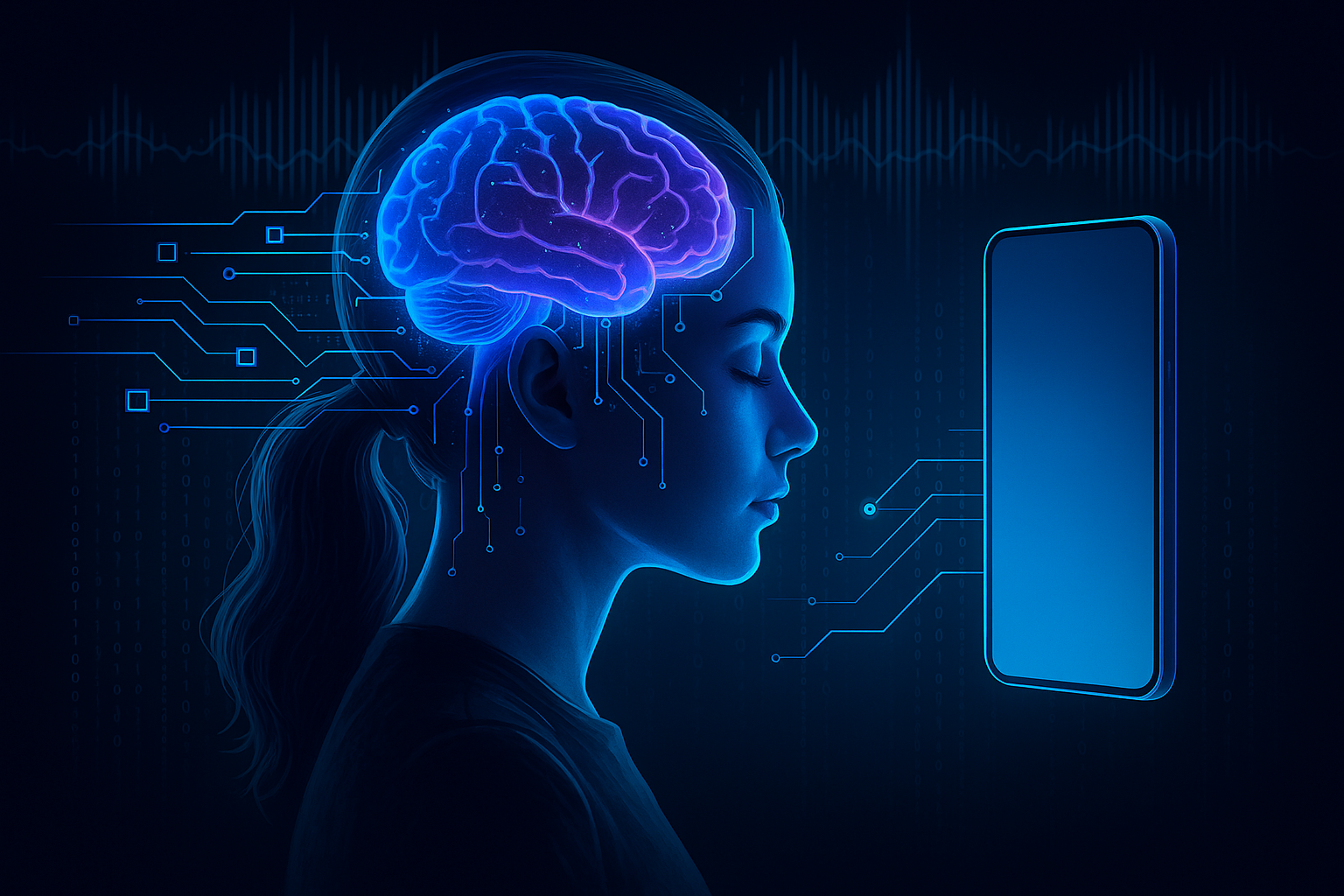
    The era of touchscreens may soon give way to something far more intuitive — Neural Interfaces. Imagine controlling your phone, car, or computer simply by thinking about it. This emerging field of technology is redefining how humans and machines interact, bridging biology and digital systems in ways that once belonged only in science fiction.

    Understanding Neural Interfaces

    Neural interfaces, or brain-computer interfaces (BCIs), allow direct communication between the brain and external devices. Using electrodes that detect brain signals, these systems interpret neural activity and translate it into digital commands. In simple terms, they let your mind speak to machines — and those machines understand you.

    From Research Labs to Real Life

    Once confined to neuroscience research, neural interfaces are now entering practical applications. Companies like Neuralink, Kernel, and Synchron are building implantable and non-invasive systems that can restore mobility to paralyzed patients, enhance memory, and extend human capabilities. In 2024, Synchron’s BCI enabled patients to control devices using thought alone — a breakthrough moment in medical technology.

    How Neural Interfaces Work

    Neural interfaces capture electrical signals generated by neurons and translate them using AI-powered decoding algorithms. When someone imagines moving their hand, for example, the system interprets the signal and moves a robotic arm. Over time, the system learns and adapts to the user’s neural patterns, creating an increasingly seamless connection between thought and action.

    Beyond Smartphones: A New Interaction Era

    The next decade may see neural interfaces replacing touchscreens and voice assistants as our main mode of interaction. Imagine sending messages, browsing the web, or composing music — all powered by thought. Unlike traditional interfaces, neural systems remove friction completely, enabling natural, instant communication between mind and machine.

    Ethical and Security Considerations

    Despite their promise, neural interfaces raise significant ethical questions. Who owns your brain data? How can we ensure neural information remains private? Security and consent will play a defining role in shaping how society adopts these technologies responsibly.

    Creative Possibilities

    For creators, musicians, and artists, neural interfaces open up unprecedented opportunities. Composing a melody directly from emotional patterns or designing visuals through imagination could become reality. These innovations align perfectly with The Bhaskars’ philosophy — blending human creativity with intelligent technology.

    The Road Ahead

    Neural interfaces are still in their infancy, but rapid advancements are bringing them closer to mainstream adoption. Miniaturized hardware, better AI models, and improved signal accuracy are setting the stage for widespread use. In the near future, they might not just assist humans — they could expand what it means to be human.

    Conclusion

    Neural interfaces represent the next great leap in human-computer interaction. They blur the boundary between human intent and digital execution, redefining how we live, create, and communicate. As we move beyond screens and into seamless mind-machine connectivity, the technology of tomorrow may be powered not by touch — but by thought.

  • The Rise of Edge AI in 2025: Smarter Devices Ahead

    The Rise of Edge AI in 2025: Smarter Devices Ahead

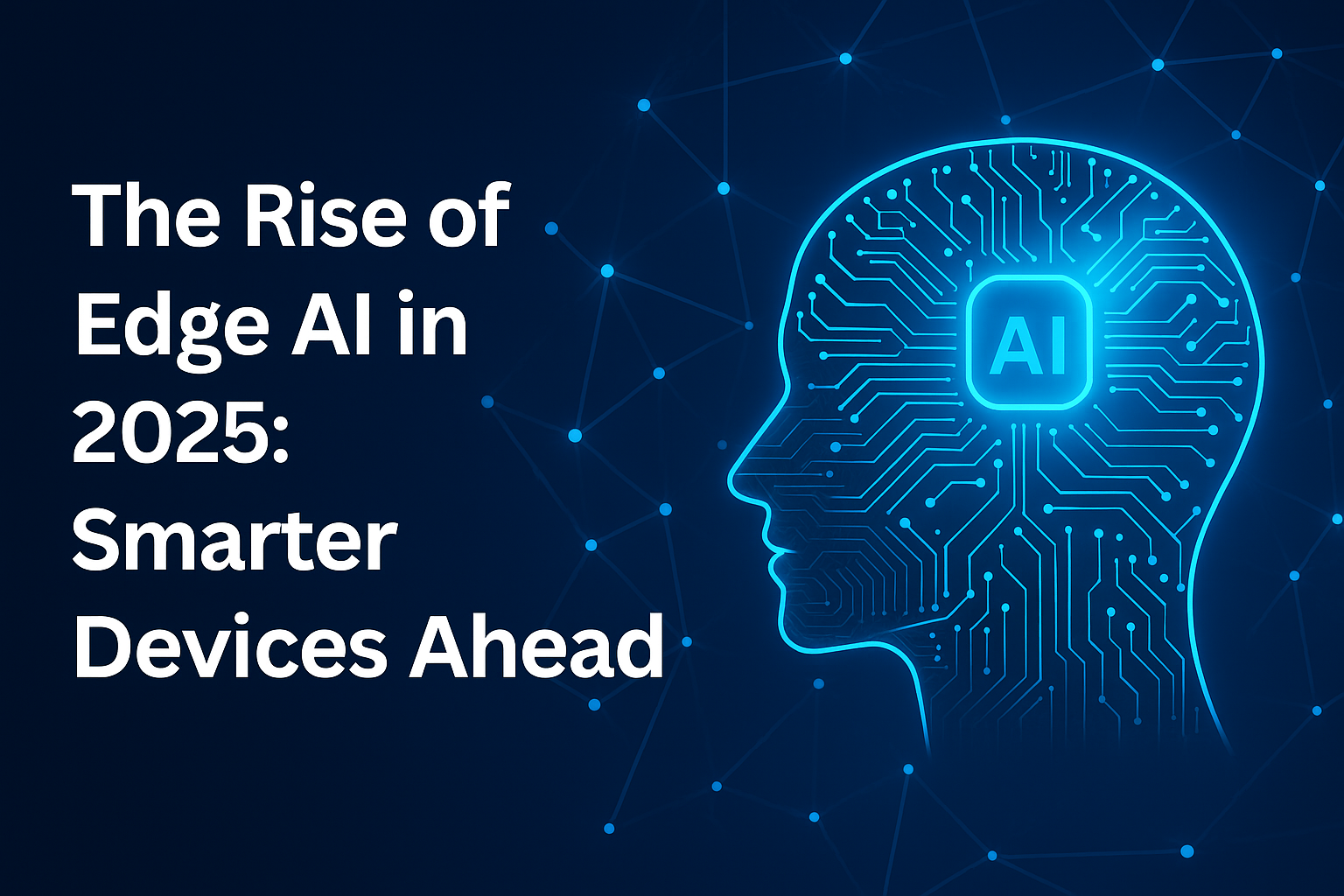
    Edge AI in 2025 is transforming how intelligent systems operate across industries. Unlike traditional cloud-based artificial intelligence, Edge AI processes data locally on devices—from smartphones to self-driving cars—without needing constant internet connectivity. This evolution enables faster decision-making, better privacy, and reduced dependency on large data centers. Edge AI represents the next step in distributed intelligence, making technology more efficient, adaptive, and personal.

    What Is Edge AI?

    Edge AI, short for Edge Artificial Intelligence, refers to running AI algorithms directly on hardware devices instead of relying on remote cloud servers. This approach leverages embedded chips, sensors, and specialized processors capable of executing complex models locally. The advantage of Edge AI lies in its ability to process data in real time, even in low-connectivity environments, providing instant responses critical for safety and automation.

    Why Edge AI Matters in 2025

    By 2025, Edge AI has moved from experimental to essential. With billions of connected devices worldwide, the volume of data generated every second is overwhelming traditional cloud infrastructures. Processing this information locally not only saves bandwidth but also enhances security. As organizations embrace Edge AI, users gain faster, smarter, and more reliable device performance.

    Real-World Applications of Edge AI

    • Smartphones: On-device AI enables instant translation, facial recognition, and camera enhancements without cloud delay.
    • Autonomous Vehicles: Cars use Edge AI to process sensor data for navigation, obstacle detection, and collision avoidance.
    • Healthcare: Wearables monitor vital signs in real time and alert doctors about anomalies instantly.
    • Manufacturing: Predictive maintenance systems analyze machine health and prevent downtime locally.
    • Retail: Smart checkout systems recognize products and track inventory without human input.

    Benefits of Edge AI

    1. Speed: Real-time data processing with minimal latency.
    2. Privacy: Sensitive information stays on the device instead of being sent to external servers.
    3. Reliability: Edge AI continues to function even without internet access.
    4. Energy Efficiency: Reduced data transmission saves power and bandwidth.
    5. Scalability: Millions of devices can operate independently without overloading central systems.

    Challenges and Limitations

    Despite its promise, Edge AI faces several challenges. Developing compact yet powerful AI models that fit within hardware constraints requires advanced optimization. Maintaining consistent performance across diverse devices and ensuring software updates remain secure are ongoing challenges. Additionally, interoperability between hardware vendors and AI frameworks must improve to ensure seamless deployment.

    The Future of Edge AI

    The future of Edge AI in 2025 and beyond lies in hybrid intelligence—balancing the strengths of local and cloud processing. Advancements in neuromorphic chips and federated learning will make devices smarter over time while preserving user privacy. Edge AI will drive innovation in autonomous systems, IoT, and robotics, setting the foundation for decentralized intelligence networks. As computing moves closer to where data is generated, Edge AI will redefine how we interact with technology daily.

    Conclusion

    Edge AI in 2025 represents a crucial evolution in artificial intelligence—bringing computation, decision-making, and intelligence closer to users. By reducing dependence on centralized systems, it delivers faster, more secure, and energy-efficient experiences. From healthcare to transportation, Edge AI empowers the next generation of connected technology, shaping a future that is truly smart and responsive.

  • The Future of Quantum Computing and AI in 2025

    The Future of Quantum Computing and AI in 2025

    Quantum computing and AI in 2025 are together shaping the next technological revolution. While artificial intelligence helps systems learn and reason, quantum computing provides the raw computational power to solve problems once thought impossible. The convergence of these two domains is transforming industries such as healthcare, finance, cybersecurity, and climate science. Understanding how quantum computing and AI complement each other is essential for predicting the innovations that lie ahead.

    What Is Quantum Computing?

    Quantum computing is a new paradigm that uses the principles of quantum mechanics to perform complex calculations at incredible speeds. Instead of using bits that exist as 0 or 1, quantum computers use qubits that can exist in multiple states simultaneously. This property, called superposition, allows quantum systems to process vast amounts of data in parallel, giving them exponential advantages over classical machines.

    How Quantum Computing Enhances AI

    Quantum computing and AI together promise to accelerate model training and decision-making. Current AI systems require enormous computing power to process high-dimensional data. Quantum algorithms, such as quantum machine learning (QML), can significantly reduce training time by evaluating multiple possibilities simultaneously. This means that tasks like image recognition, natural language processing, and molecular simulations will become faster and more accurate.

    Real-World Applications in 2025

    • Healthcare: Quantum computing and AI will analyze genetic data to design personalized medicines.
    • Finance: Quantum algorithms will optimize trading strategies and manage portfolio risks in real time.
    • Cybersecurity: Quantum encryption will secure data transmission against even the most advanced attacks.
    • Climate Science: Quantum simulations will help predict environmental patterns and model global warming scenarios.
    • Manufacturing: AI-driven quantum models will optimize production lines for efficiency and minimal waste.

    Benefits of Quantum Computing and AI Integration

    1. Speed: Quantum algorithms can process massive datasets exponentially faster.
    2. Accuracy: AI models enhanced by quantum systems can reduce errors in predictions.
    3. Optimization: Businesses can simulate millions of outcomes simultaneously for better decision-making.
    4. Innovation: The synergy between quantum computing and AI opens new frontiers in materials, robotics, and automation.

    Challenges to Overcome

    Despite their potential, quantum computing and AI still face several hurdles. Quantum computers remain extremely expensive and difficult to maintain due to the need for near-zero temperature environments. Developing quantum algorithms that outperform classical systems is also a significant challenge. Moreover, ethical concerns around AI bias and the potential misuse of quantum-enhanced systems must be addressed through regulation and transparency.

    The Future of Quantum Computing and AI

    By 2025 and beyond, hybrid architectures combining classical, quantum, and AI systems will become mainstream. Tech giants are already investing heavily in quantum processors integrated with AI frameworks. In the next decade, developers will have access to cloud-based quantum computing platforms to train models and simulate scenarios once deemed impossible. As algorithms evolve, quantum computing and AI will jointly redefine automation, creativity, and problem-solving.

    Conclusion

    Quantum computing and AI in 2025 represent the most transformative partnership in modern technology. Their integration will not only accelerate innovation but also reshape entire industries. From faster scientific discoveries to smarter cities, the fusion of quantum computing and AI will push the boundaries of what humanity can achieve. The future belongs to those who learn to harness this power responsibly.